Showing posts with label NC. Show all posts

Saturday, March 9, 2019

March Forth!...in shades of yellow

"Mama's Daffodil" photo by KLWood
If the month of March were a color, it would surely be yellow. Fresh new flowers burst forth in buttery lemon shades to encourage the golden sun on its journey toward the vernal equinox and beyond. Mirroring the sun are daffodils, dandelions, forsythia, and my personal favorite—buttercups.

"Buttercup Cottage" photo by KLWood

When we first found our home here in Edenton, North Carolina, it was in the month of March, with yellow swaths of gently gleaming buttercups swaying in the soft breezes of the Albemarle Sound. We were both smitten by the charm of this little, two-story Victorian-era cottage,
"Buttercups" by Manfred Richter- Pixabay  
surrounded by those diminutive botanical dancers, and promptly named it “Buttercup Cottage.”

Emily Dickinson welcomed March in her poem “Dear March—Come in." Here is the 
first stanza for your Spring reading pleasure:
How glad I am -
"Forsythia" by  KIMDAEJEUNG- Pixabay
I hoped for you before -
Put down your Hat -
You must have walked -
How out of Breath you are -
Dear March, how are you, and the Rest -
Did you leave Nature well -
Oh March, Come right upstairs with me -
I have so much to tell -

So, my dear reader, slip on your 
yellow sweater, don your yellow 
cap, or if there's rain, pull on 
"Dandelion" by Holi Ho- Pixabay
your yellow slicker, and 
March Forth to welcome 
the Sun-King of Spring
and his court of dancing yellow
blossoms!
Thanks for stopping by...
y’all come back, now!
Kate
"At Our Buttercup Cottage" photo by author's mother, Oleta Wood


Wednesday, June 20, 2018

Well Wishes...from our Wishing Well

I wish you all the joy you can wish.”
"Our Wishing Well" photo by KL Wood
--William Shakespeare

When my husband, Bill, sets his mind, heart, and creativity to a project, you can rest assured it will be well done. The latest project to catch his imagination has been the designing and building of a Wishing Well for our front yard, complete with water spilling from a tilted brass teapot. The Wishing Well actually serves two purposes: wishing, of course, which I will expound upon in the next paragraph, and the more practical purpose of covering the sump pump necessary to keep our little old cottage from floating away when rainwater pours down Edenton’s West Church Street.

To wish was to hope, and to hope was to expect.”
--Jane Austen

But, let’s talk about Wishes. Some say wishing is an empty and fruitless activity. I say,
Photo, Public Domain via Wikimedia Commons
there’s something innately important in the act of wishing. How many of us have, at that moment before wishing upon a star, a fountain, a Wishing Well, or a birthday candle, stopped to seriously consider what we truly wish for? The very act of wishing crystallizes our most immediate desires and, even believing it to be a silly superstition or ritual, we usually put real thought into it. Having to wish for something makes us think about our priorities in life and, for that fleeting moment, we wonder what it is we really wish were different, or really wish would remain the same. Because...what if that Wish came true? We’ve all heard the old adage, ”Be careful what you wish for.” I can say from my own decades of wishing, I’ve had a couple Wishes come true whose repercussions proved quite challenging.


A dream is a Wish your heart makes.”
--Cinderella
Undine by John William Waterhouse, 1872

And what about the tradition of throwing coins, along with our Wishes, into the water? Although Bill likes to tease that we plan to fund our retirement from the Wishes of our fellow Edentonians, and could even offer a drive-by “Easy Pass” plan, I’ve stopped to ponder why coins and Wishes often go hand-in-hand. Back in ancient times, people believed that certain fountains, springs, or wells, were inhabited by gods with the power to grant Wishes (or at least ensure the continuance of the flow of clear, life-giving water.) Throwing valuables into the water was meant to appease the deities and keep life flowing along in a positive direction. In other societies, a Wish was solidified by the making of a sacrifice. If it was important enough to wish for, it was important enough to sacrifice for. In other words, “Put your money where your mouth is,” if you want to see real change. So, today, when we toss in a coin with our Wish, I think the tiny financial expenditure is symbolic of the importance of the Wish we are making. Our first official Well Wisher was neighbor, Deems Cole, who tossed in coins with his Wishes and allowed me to photograph the moment for posterity.
"Our First Well Wisher" photo by KL Wood


As “Keepers of the Well,” we invite you to wish big and wish small, toss a coin or send a prayer. You’re not limited to the traditional three Wishes! Our Wishing Well at 215 West Church Street is always open to you. So...

Stop on by and wish a spell,
You’re Well-come to our Wishing Well.
Wishes really can come true,
And that’s our Wish for each of you.
Touch the bricks and close your eyes,
Make your Wish and realize,
A Wish is hope for better things,
A starting place to give it wings.”
--Kate Ahearn

Thanks for stopping by...y'all come back, now! (And if you don't live near Edenton, North Carolina, our Well takes long-distance Wishes, too!)
Kate


Monday, August 7, 2017

Haint Blue...how to repel evil spirits and spiders too

The next time you go out and sit on your porch, relaxing, rocking, bird and people watching, look up. I mean directly up at the porch ceiling. What color is it? If you live here, in Edenton, or any place in
Author's Front Porch Ceiling photo by KL Wood
the South, it is mostly likely a soft shade of greenish blue, especially if it’s an older home. Huh. Never thought about it, did you? Unless it’s time to repaint that outdoor ceiling, even those of us who grew up kicking our bare legs back and forth on a southern porch swing, often take that color for granted. I mean it’s pretty and it’s obviously what our ancestors preferred so it’s just traditional, right? But why?

The answer comes in the form of its regional name, “Haint Blue.” From the Gullah culture of coastal South Carolina, comes the word “haint,” referring to restless spirits of the not-so-dearly-departed who might bring evil into a home. This particular shade of blue was believed to keep the haints away and, thus, thwart their plans to spirit the residents off or influence them in some negative manner. Why would haints be repelled by such a lovely color? Because, apparently, they are easily fooled. Evil spirits are said to be unable to cross water and this shade of blue mimics the color of water. So since it’s not practical to include a moat around our homes, this paint does the trick. In some places, such as Charleston, SC and Savannah, GA, you will find not only porch ceilings painted Haint Blue, but shutters, trim work, and sometimes entire walls.

Haint Blue is thought to repel, not only evil spirits, but insects, as well. Some theorize that, like the haints, the pesky little critters are also fooled by the color. Not because they think it’s water, but because they think it’s the sky. As with much folklore, there is a kernel of truth there. The original Haint Blue paint was a mixture of indigo, milk and lime. It’s the lime that, most likely, kept the ceiling bug-free. Today’s modern versions of Haint Blue do not contain lime, so keep your fly swatter handy as you lounge beneath that lovely ceiling.

Whether, or not, Haint Blue repels evil spirits or insects, it remains a calming, cooling, peaceful color with which to greet our upward gaze. Coupled with its tie to our past, please consider it when sprucing up your porch. I’m squarely in the “can’t hurt, might help” camp. And besides, it’s so pretty!

Thanks for stopping by...y'all come back now.  
Kate


Wednesday, May 6, 2015

Great Balls of Fire!...fun with fireballs in the South

By Haloeffect via Wikimedia commons
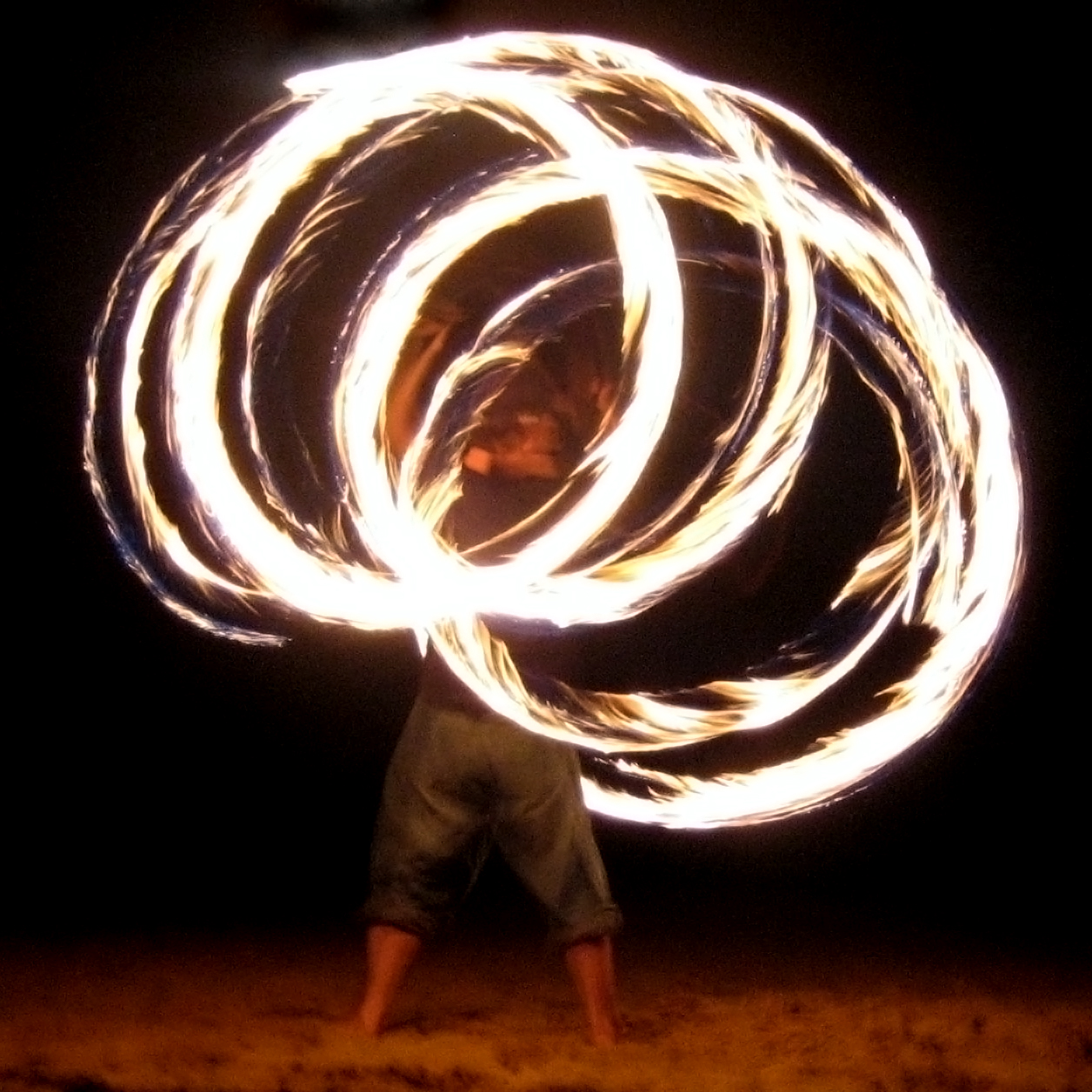
When I told my ninety-one-year-old mother about a newspaper article from 1893 New Bern, North Carolina about a night's entertainment by a lantern swinger, it reminded her of a childhood memory. Kerosene balls. Kerosene what? Balls. Flaming. Flying through the air. At that point I sat down and asked for details.


By Sebastian Ritter via Wikimedia Commons
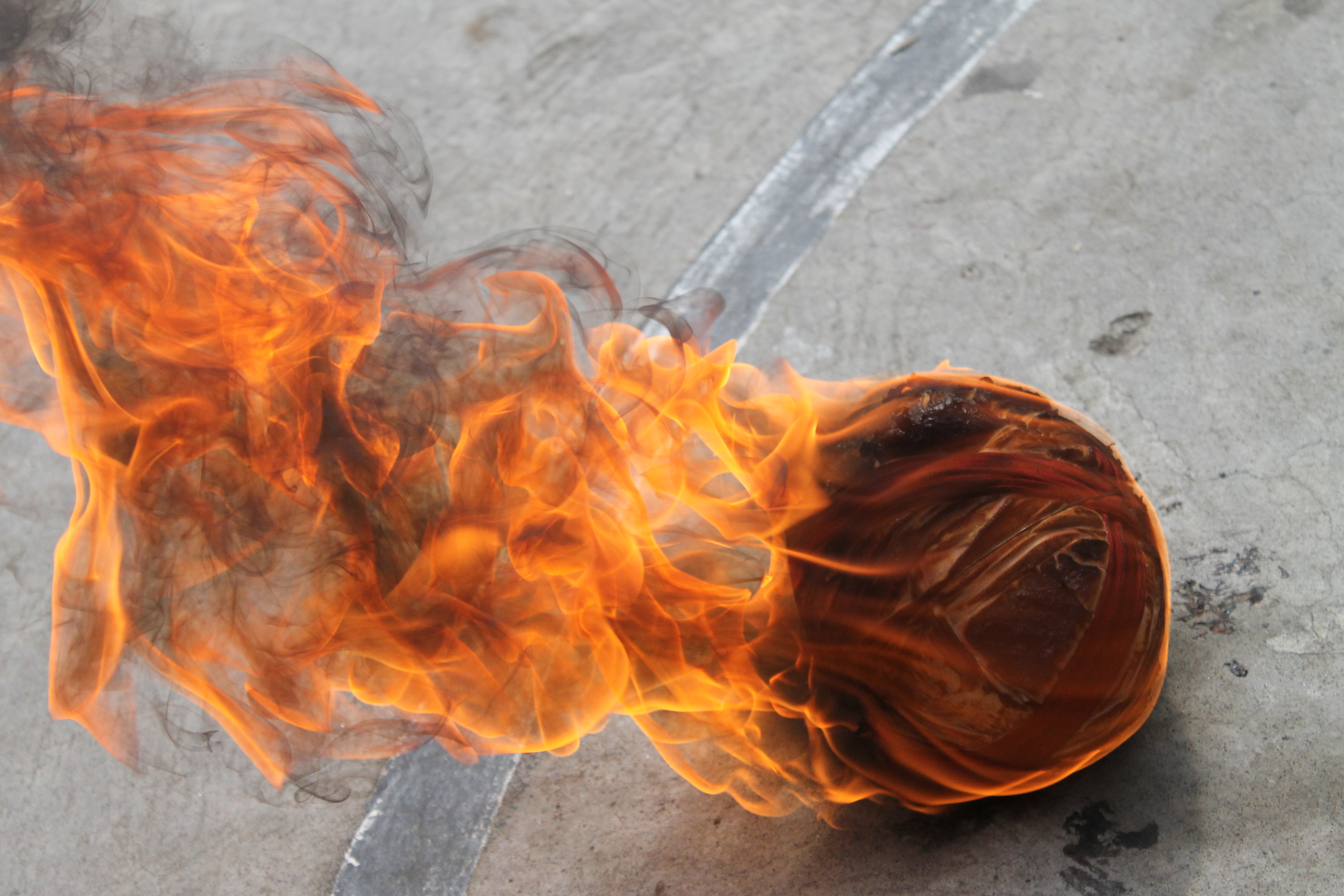
Back in the 1920s and early 30s when Mama was a child growing up on a farm near Swansboro, North Carolina, entertainment was as homegrown as the food on their tables. On special nights like New Year's Eve and the Fourth of July, when more affluent communities paid for fireworks displays, the farmers and fishermen of coastal Carolina gathered on open expanses of farmland or sandy beaches to toss around balls of kerosene-soaked cloth or yarn. Many an old, holey sock was unraveled and wound into a tight sphere, soaked in vats of kerosene for a couple weeks, then dried and ready for fiery fun.

On the appointed night, folks would gather and watch as young men lit the kerosene balls and tossed
them into the inky darkness, usually with bare hands although they might coat their palms with dirt first. As a little girl, standing back out of harm's way watching the fireballs streak through the night sky, she found the display beautiful and exciting. I did an Internet search and found the practice is called fireballing or kerosene balling and often saw it noted as a form of entertainment in rural
By Elmer Guevara  via Wikimedia Commons
Alabama. There's a YouTube video showing a modern-day gathering of Alabama fireball tossers keeping up their family's annual tradition. In addition to tossing the balls into the air and playing flaming games of catch, there was a version called "Hail-E-Over" in which people would stand on either side of a tin-roofed house and toss a fireball over its top. The idea was to keep the ball in the air, lobbing from one side to the other until the losing side allowed the ball to thud to the ground.
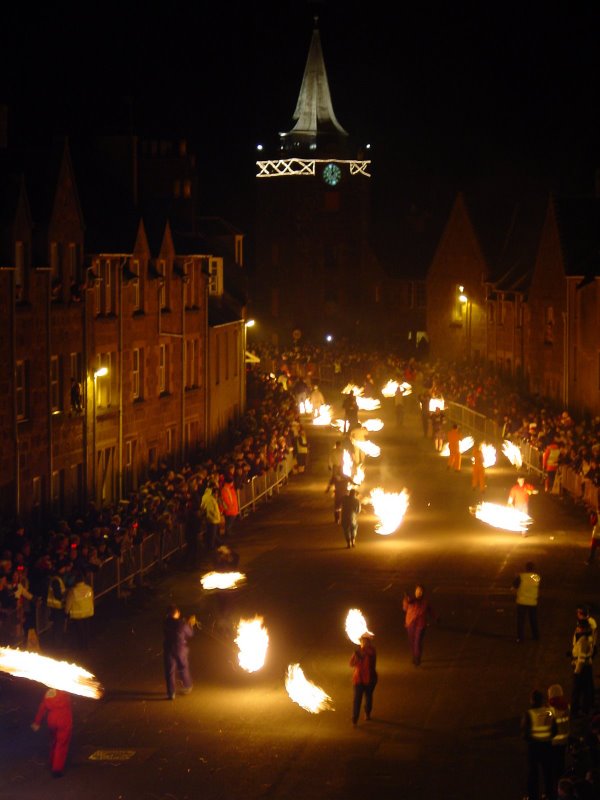
Stonehaven Parade By MrPurple , via Wikimedia Commons

The roots of such flaming entertainment may reach back to Scotland. One notable example is the annual fireball parade in Stonehaven on the night of Hogmanay (New Year's Eve.) Balls of fire encased in wire cages are swung overhead from chains as the participants process through the town. The traditional thought is that the fire burns away bad spirits of the old year, clearing the way for the new year. There's even a Stonehaven Fireballs Association!  http://stonehavenfireballs.co.uk/about
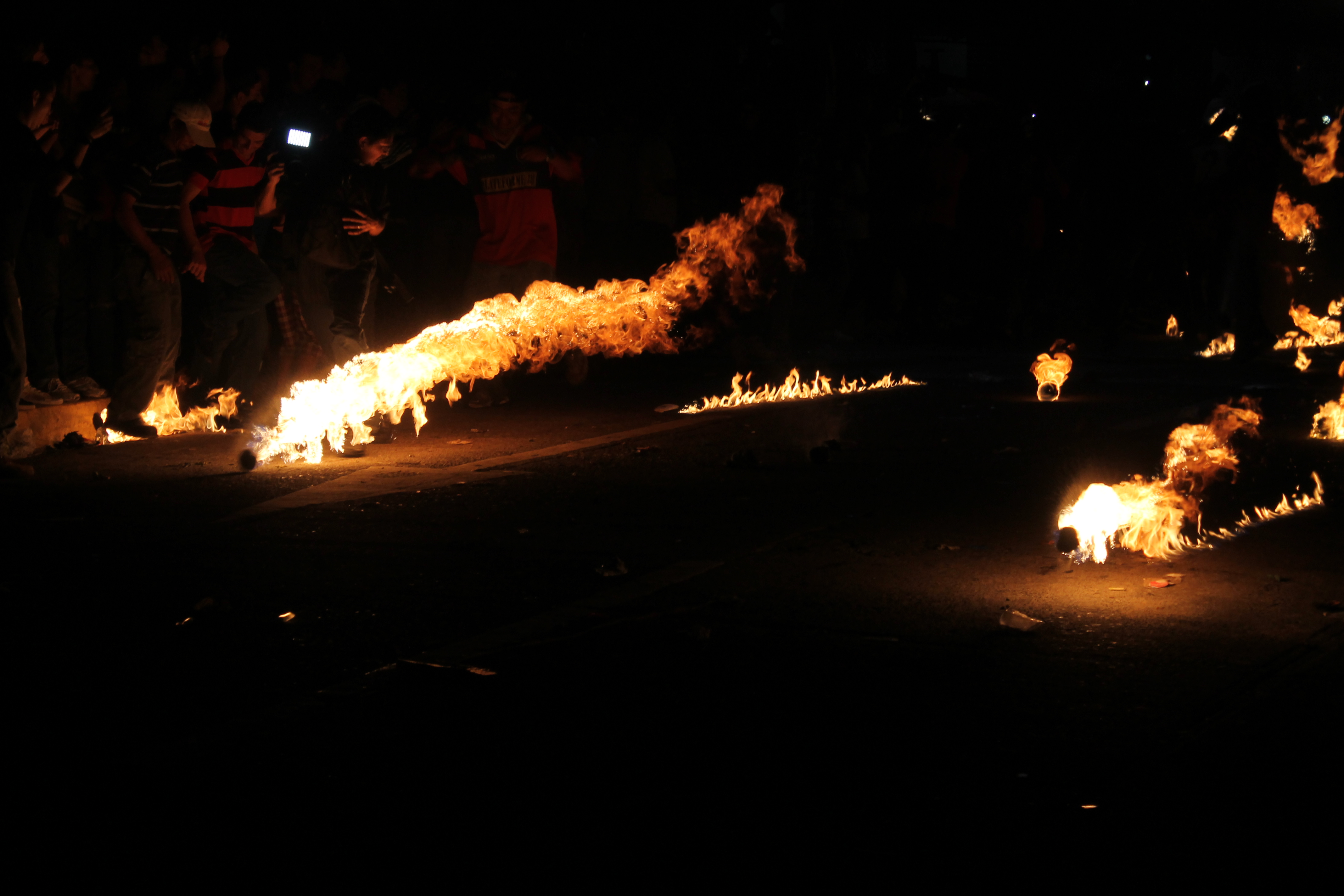
Quite a bit further south in El Salvador there is an annual Bolas de Fuego or "Balls of Fire" festival in which teams hurl kerosene-soaked flaming balls at each other. Apparently throwing fire around knows no borders!
Bolas de Fuego By Elmer Guevara via Wikimedia Commons


Have a good couple weeks, dear Reader. Thanks for stopping by...y'all come back now! (And...Remember, Only YOU, can Prevent Forest Fires!)

Kate
Smokey and Me By William Francis Ahearn (Author's Husband)


Wednesday, November 5, 2014

What to Drink After Colonial Tea Parties?...revolutionary thirst quenchers

The Destruction of Tea at Boston Harbor, 1846 by Nathaniel Currier
Here, in Edenton, North Carolina, the month of October, 2014, was set aside to commemorate one of the first organized political actions by a group of American women: the Edenton Tea Party. On October 25, 1774 (ten months after the famous Boston Tea Party in which male colonists disguised themselves as Mohawk Indians and dumped shiploads of tea into Boston Harbor,) Edenton's Penelope Barker organized a tea party of 51 ladies who signed a petition addressed to King George, pledging a boycott against the purchasing
Penelope Barker, 18th cent, artist unknown
of tea and cloth imported from England. The protests were spurred by The Tea Act in which England imposed a tax on tea bought by the colonists. Although the tax placed upon the tea was actually lower than it had been in the past, it was the notion of “taxation without representation” that fueled the patriotic protests.

Penelope Barker is a fascinating subject and I will dedicate a post to her at some time in the near future. But for now, I’ve been pondering what took the place of tea in America once its consumption was deemed unpatriotic.
In 1773, Susannah Clarke penned the following:

We’ll lay hold of card and wheel,
And join our hands to turn and reel;
We’ll turn the tea all in the sea,
And all to keep our liberty.
We’ll put on our homespun garbs
And make tea of our garden herbs,
When we are dry, we’ll drink small beer
And freedom shall our spirits cheer.

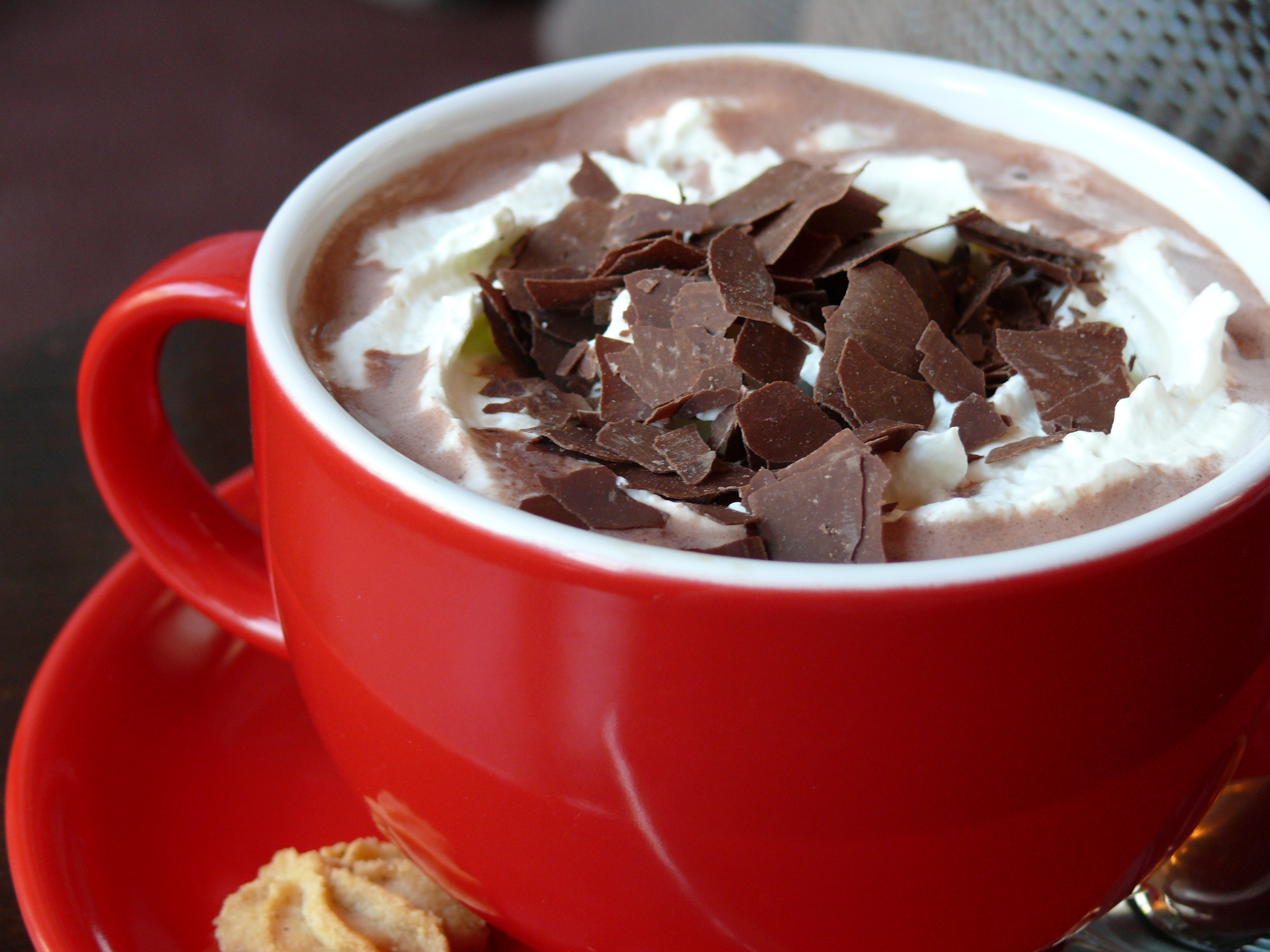
Schokolode by By Itisdacurlz via Wikimedia Commons
As alluded to in Mrs. Clarke’s poem, herbal teas brewed from native American roots and plants, and small beer (the Colonial version, made with very low alcohol content) were two beverages of choice. In addition, coffee gained great popularity (to this day, still ranking higher than tea consumption on the western side of “The Pond,”) and my personal favorite, chocolate, maintained its place at Colonial American tables. (***Interesting Chocolate Factoid!*** Although drinking chocolate had been the delicious norm for centuries, did you know that, other than chocolate used to flavor baked goods, there was no form of solid “eating” chocolate prior to 1830? A big “Thank You” to England’s Joseph Fry and Sons for all the leftover chocolate Halloween candy taking space in my cupboard! Of course, it won’t be there for long.)

Mint Tea By Onderwijsgek via Wikimedia Commons
The non-tea “teas” brewed in the Revolutionary era, were often made by steeping the leaves of strawberry, rhubarb, blackberry, or goldenrod plants. One favorite was called “Balsamic Hyperion” brewed from dried raspberry leaves and another called “Liberty Tea,” was made from the leaves of a plant aptly named loosestrife.

Well, time for a cup of tea, I think…or coffee…or maybe small beer…or hot chocolate. Yeah, definitely chocolate! (Just for research purposes, of course…) 


Have a good couple weeks, dear Reader. Thanks for stopping by...Y'all come back now!
Kate

Wednesday, May 7, 2014

Bath Time...an 18th century town curse or blessing?


Bath, NC (KLWood, 2014)
Recently, my husband and I made the trek down to Bath, North Carolina, just about one hour south of us here in 
Bath, NC
Edenton. Bath, created in 1705, is a fascinating place with its designation as North Carolina’s first established town and, along with many other intriguing facts, the residence of the infamous pirate captain, Edward Teach (AKA Thatch AKA Blackbeard.) Wandering along its quiet streets and down by the Pamlico River, it’s easy to envision life three centuries ago when the little town was bustling with activity including activity that inspired a visiting minister to cast a curse upon the village, but more on that later…

European settlements began growing up along the Pamlico River during the 1690s, leading to Bath’s official establishment in 1705. A collection of books sent to its St. Thomas Parish in 1701 became the origins for the colony’s first public library. (My husband, Bill, went into the Bath Public Library and speaking to one of the librarians was disappointed to learn that all but one of the original books had disappeared over the years and the one remaining book was now owned by the church and not available for public viewing.) Bath became North Carolina’s first port of entry with trade in furs, tobacco, and naval stores.

The first settlers of Bath were French
St. Thomas Church, Bath, NC, (KLWood, 2014) 
Protestants who moved down from Virginia. Early English settlers included John Lawson who was the surveyor general for the colony
of North Carolina and who designed the town’s layout. You may recall from a previous blog post --March 19, 2014-- the story of how poor John Lawson, author and happy expounder of the virtues of North Carolina (including its native Indian
Palmer House, Bath, NC, (WFAhearn, 2014)
tribes,) was killed in 1711 by the Tuscarora in a most horrific manner. 

As a matter of fact, the quiet, nearly deserted streets of Bath today, were the scenes of much political, social, and religious turmoil during its first years. The years 1711-1712 were especially challenging with the area a center of serious upheaval and strife between the Church of England’s Anglican Church and the Society of Friends (Quakers) culminating in Cary’s Rebellion. During that time, the region was also decimated by a yellow fever epidemic, severe drought, and the Tuscarora War. At one point during the war between the Indians and the colonists, Bath was the refuge for more than three hundred widows and children. Keep in mind that just four years earlier, Bath was home to only twelve houses and a total of fifty residents.
Palmer House, Bath, NC (KLWood, 2014)

As the region began putting its pieces back together following the cessation of the Tuscarora War in 1715, Bath began to flourish with increased traffic and trade once more. When Blackbeard the pirate, governor’s pardon in hand, decided to settle down, he chose the town of Bath. There, he and his rowdy crewmen became the life of the party around town, a town that is reported to have grown to a
Plum Point home of Blackbeard, seen from Bath (KLWood, 2014)
population of 8,000. Blackbeard was wined and dined by the locals who were fascinated by his wild tales of adventure and happy to do business with the reformed (so-called) pirate. He took a young wife from the Bath residents, a sixteen year old girl by the name of Mary Ormond, daughter of a nearby plantation owner. The marriage was short-lived however since, within a couple months, Blackbeard was back in the pirating trade and, in November, 1718, was killed in Ocracoke, North Carolina by orders of Virginia’s Governor Spotswood. (You may note it was not North Carolina’s governor, Charles Eden, who ordered Blackbeard’s demise. Governor Eden had actually performed the pirate’s wedding ceremony earlier in the summer.)


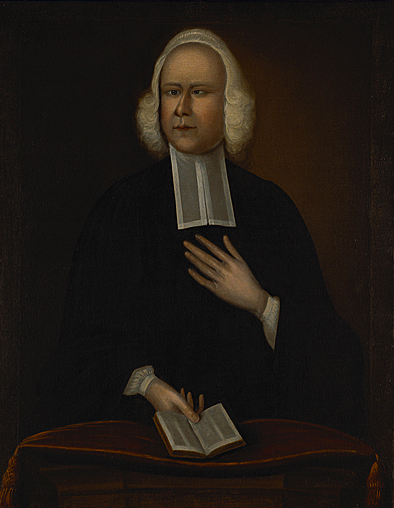
One of Bath’s more colorful incidents occurred during the mid-eighteenth century when the famous traveling preacher, George
George Whitefield, 1750, by Joseph Badger
Whitefield, reportedly placed a curse upon the town. Whitefield, a minister born in England who was a famously 
impassioned leader of the religious movement in America known as the Great Awakening, and reported to have drawn ardent crowds of 8,000 at the time, visited Bath on several occasions. His manner and austere preachings against such amusements as dancing were not well received in a town with a history of prosperous trade among infamous pirates. At one point, Whitefield gave up and upon leaving the town for the last time proclaimed: “There’s a place in the Bible that says if a place won’t listen to The Word, you shake the dust of the town off your feet, and the town shall be cursed. I have put a curse on this town for a hundred years.”


A Lovely Memorial Garden in Bath, NC (KLWood, 2014)
Not long after, in 1776, the town of Washington (known by us old-timers as Little Washington) was formed fifteen miles up the Pamlico River. Once the seat of Beaufort County government was moved to Washington in 1785, Bath lost most of its trade and importance and its population decreased steadily over the years, never to return to its earlier days of prosperity and power. Today, the town’s population stands at 249. Cursed? Maybe, but some who live there might well call it blessed as they enjoy its peaceful serenity. Perhaps after such a tumultuous beginning, Bath deserves such a restful retirement.

Have a good week, dear Reader. Thanks for stopping by...Y'all come back now! 

Fanciful Floral Fire Hydrant in Bath (KLWood, 2014)


Kate


Check out :    http://www.nchistoricsites.org/bath/bath.htm