Showing posts with label South. Show all posts

Monday, August 7, 2017

Haint Blue...how to repel evil spirits and spiders too

The next time you go out and sit on your porch, relaxing, rocking, bird and people watching, look up. I mean directly up at the porch ceiling. What color is it? If you live here, in Edenton, or any place in
Author's Front Porch Ceiling photo by KL Wood
the South, it is mostly likely a soft shade of greenish blue, especially if it’s an older home. Huh. Never thought about it, did you? Unless it’s time to repaint that outdoor ceiling, even those of us who grew up kicking our bare legs back and forth on a southern porch swing, often take that color for granted. I mean it’s pretty and it’s obviously what our ancestors preferred so it’s just traditional, right? But why?

The answer comes in the form of its regional name, “Haint Blue.” From the Gullah culture of coastal South Carolina, comes the word “haint,” referring to restless spirits of the not-so-dearly-departed who might bring evil into a home. This particular shade of blue was believed to keep the haints away and, thus, thwart their plans to spirit the residents off or influence them in some negative manner. Why would haints be repelled by such a lovely color? Because, apparently, they are easily fooled. Evil spirits are said to be unable to cross water and this shade of blue mimics the color of water. So since it’s not practical to include a moat around our homes, this paint does the trick. In some places, such as Charleston, SC and Savannah, GA, you will find not only porch ceilings painted Haint Blue, but shutters, trim work, and sometimes entire walls.

Haint Blue is thought to repel, not only evil spirits, but insects, as well. Some theorize that, like the haints, the pesky little critters are also fooled by the color. Not because they think it’s water, but because they think it’s the sky. As with much folklore, there is a kernel of truth there. The original Haint Blue paint was a mixture of indigo, milk and lime. It’s the lime that, most likely, kept the ceiling bug-free. Today’s modern versions of Haint Blue do not contain lime, so keep your fly swatter handy as you lounge beneath that lovely ceiling.

Whether, or not, Haint Blue repels evil spirits or insects, it remains a calming, cooling, peaceful color with which to greet our upward gaze. Coupled with its tie to our past, please consider it when sprucing up your porch. I’m squarely in the “can’t hurt, might help” camp. And besides, it’s so pretty!

Thanks for stopping by...y'all come back now.  
Kate


Wednesday, May 6, 2015

Great Balls of Fire!...fun with fireballs in the South

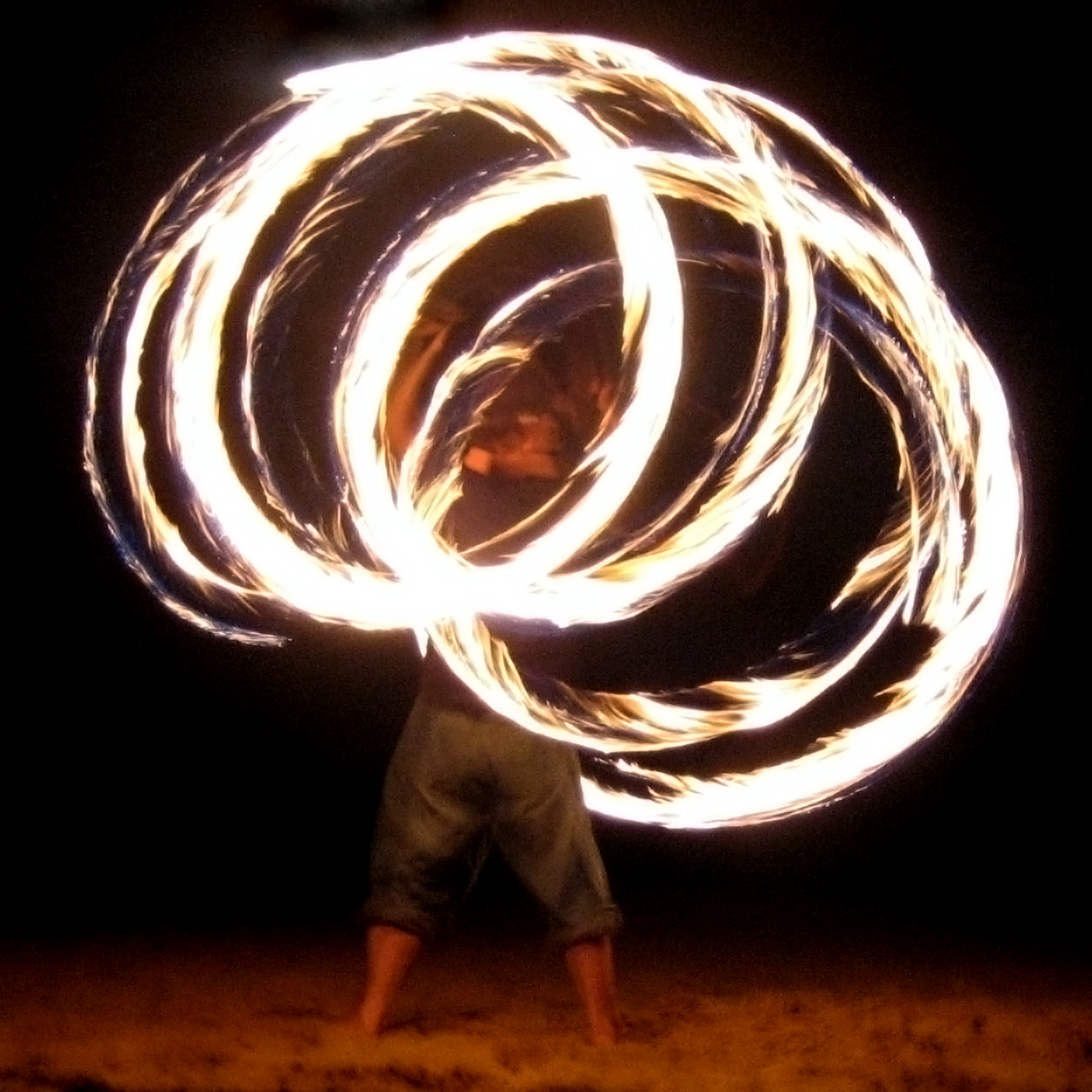
By Haloeffect via Wikimedia commons
When I told my ninety-one-year-old mother about a newspaper article from 1893 New Bern, North Carolina about a night's entertainment by a lantern swinger, it reminded her of a childhood memory. Kerosene balls. Kerosene what? Balls. Flaming. Flying through the air. At that point I sat down and asked for details.


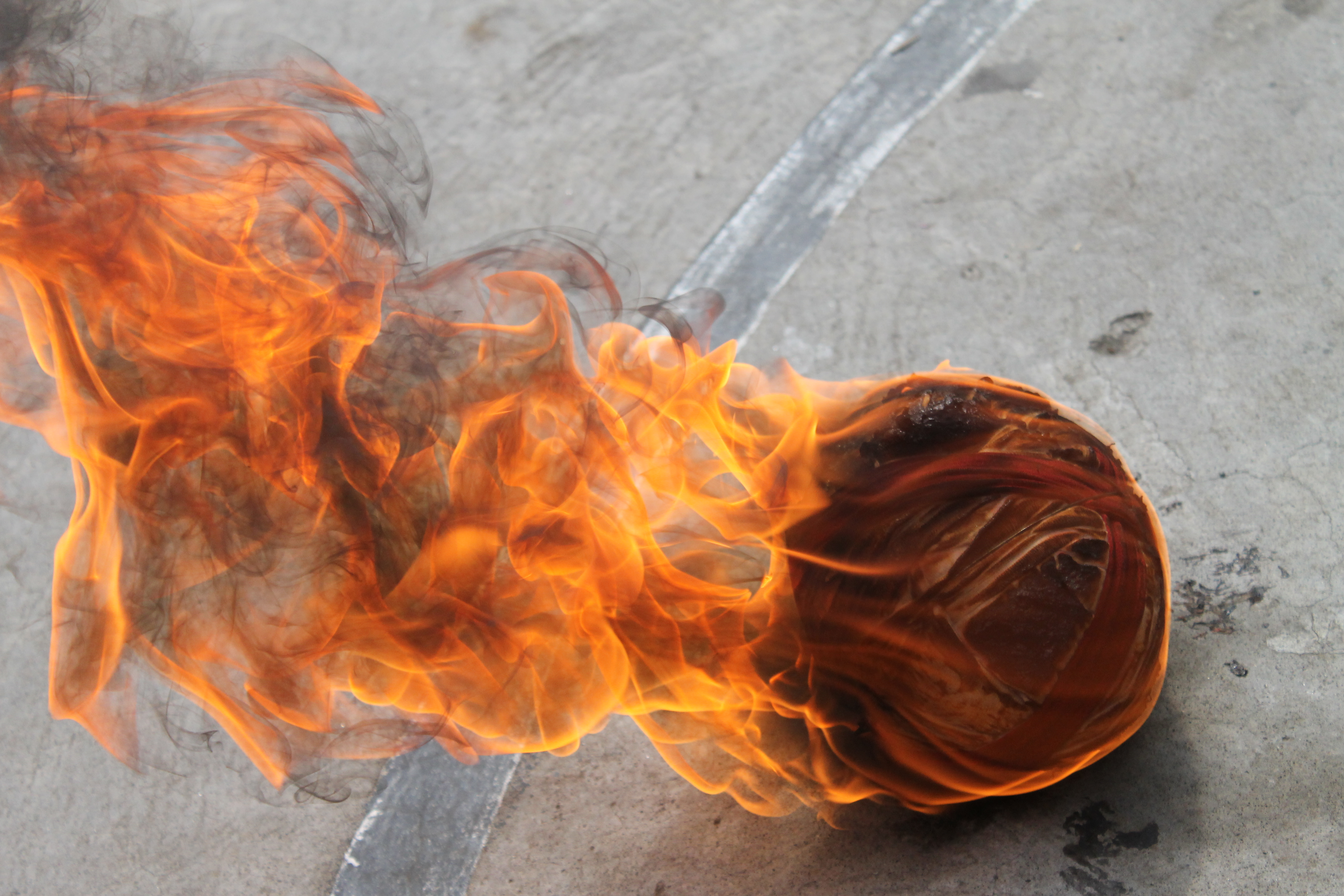
By Sebastian Ritter via Wikimedia Commons
Back in the 1920s and early 30s when Mama was a child growing up on a farm near Swansboro, North Carolina, entertainment was as homegrown as the food on their tables. On special nights like New Year's Eve and the Fourth of July, when more affluent communities paid for fireworks displays, the farmers and fishermen of coastal Carolina gathered on open expanses of farmland or sandy beaches to toss around balls of kerosene-soaked cloth or yarn. Many an old, holey sock was unraveled and wound into a tight sphere, soaked in vats of kerosene for a couple weeks, then dried and ready for fiery fun.

On the appointed night, folks would gather and watch as young men lit the kerosene balls and tossed
them into the inky darkness, usually with bare hands although they might coat their palms with dirt first. As a little girl, standing back out of harm's way watching the fireballs streak through the night sky, she found the display beautiful and exciting. I did an Internet search and found the practice is called fireballing or kerosene balling and often saw it noted as a form of entertainment in rural
By Elmer Guevara  via Wikimedia Commons
Alabama. There's a YouTube video showing a modern-day gathering of Alabama fireball tossers keeping up their family's annual tradition. In addition to tossing the balls into the air and playing flaming games of catch, there was a version called "Hail-E-Over" in which people would stand on either side of a tin-roofed house and toss a fireball over its top. The idea was to keep the ball in the air, lobbing from one side to the other until the losing side allowed the ball to thud to the ground.
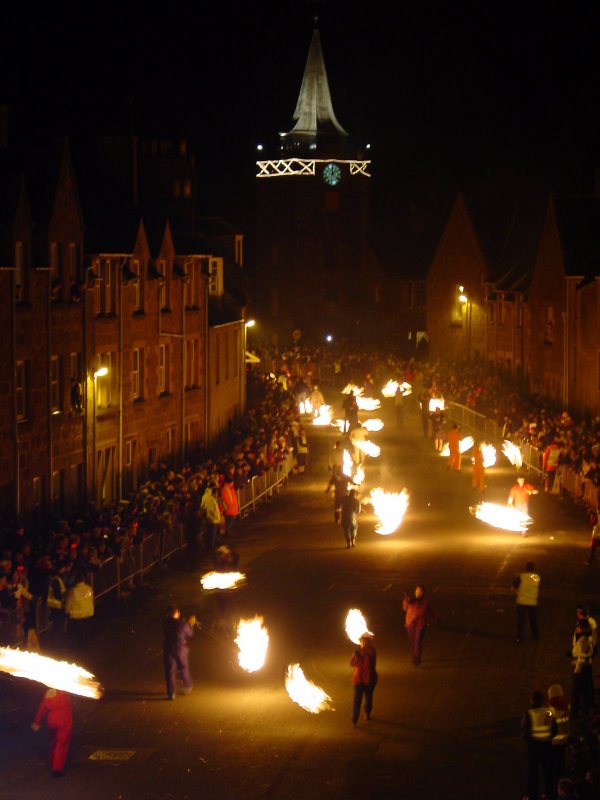
Stonehaven Parade By MrPurple , via Wikimedia Commons

The roots of such flaming entertainment may reach back to Scotland. One notable example is the annual fireball parade in Stonehaven on the night of Hogmanay (New Year's Eve.) Balls of fire encased in wire cages are swung overhead from chains as the participants process through the town. The traditional thought is that the fire burns away bad spirits of the old year, clearing the way for the new year. There's even a Stonehaven Fireballs Association!  http://stonehavenfireballs.co.uk/about
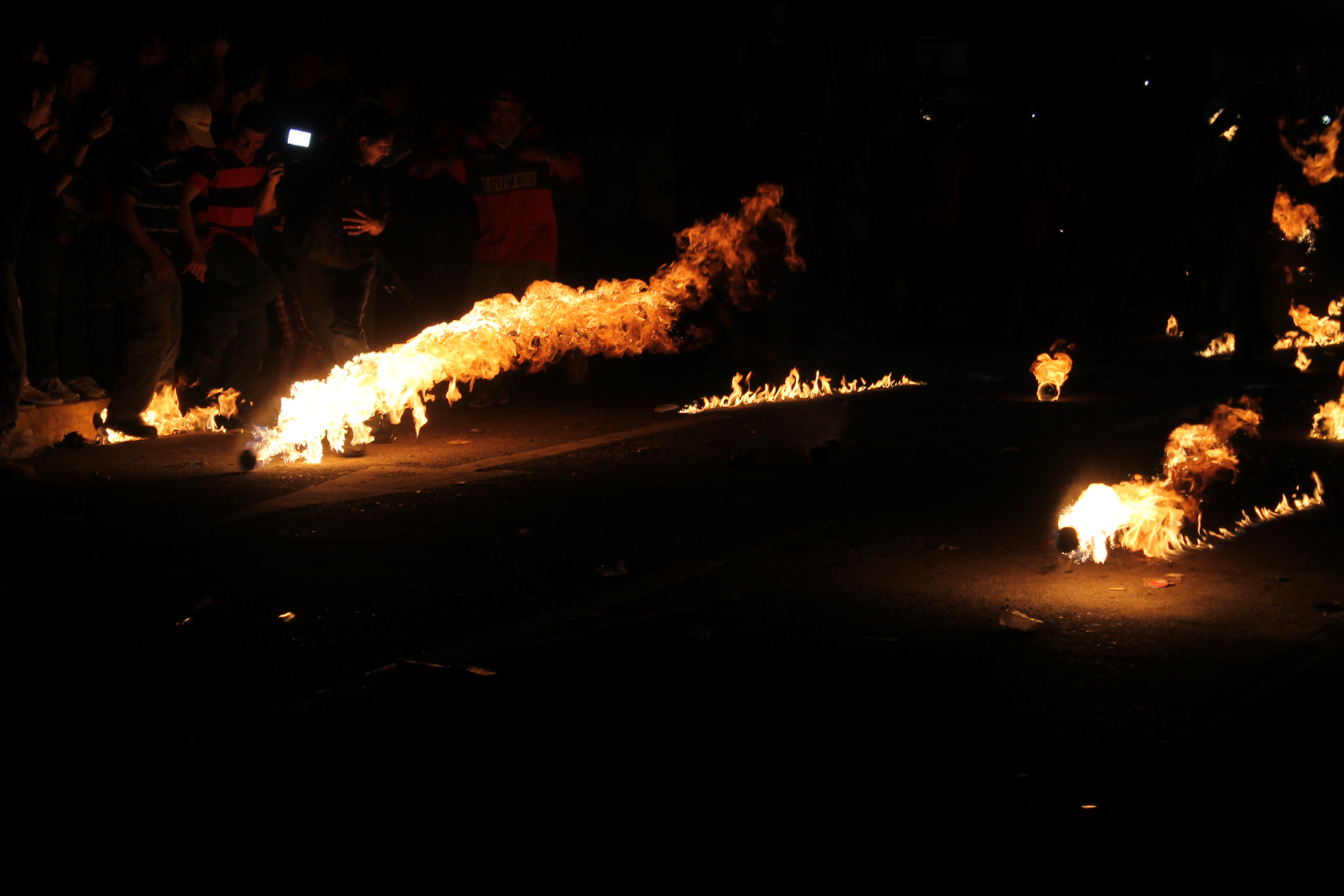
Quite a bit further south in El Salvador there is an annual Bolas de Fuego or "Balls of Fire" festival in which teams hurl kerosene-soaked flaming balls at each other. Apparently throwing fire around knows no borders!
Bolas de Fuego By Elmer Guevara via Wikimedia Commons


Have a good couple weeks, dear Reader. Thanks for stopping by...y'all come back now! (And...Remember, Only YOU, can Prevent Forest Fires!)

Kate
Smokey and Me By William Francis Ahearn (Author's Husband)


Wednesday, January 28, 2015

I Scream, You Scream, We All Scream For...Snow Cream!

"Snow Mist," original photo by the author, 
copyright,  Kathryn Louise Wood
(*Author's note: I prepared this post several days before the Northeast got blasted with the blizzard. We even got a little dusting here in Edenton; more like powdered sugar than snow. See my photo at the bottom of the post of our little winged porch pig. The photo to the left at the top, is one I took along the Blue Ridge Parkway of Virginia, several years ago.)

I think one of the most depressing weather conditions is a 38 degree rainfall. It just makes you cold to the bone and isn't even pretty. I realize I am speaking as an eastern North Carolinian, far away from the lands of winter-long frozen tundra, but I do wish we could have at least one lovely snowfall this winter. Just one. Maybe two, but any more would just be over zealous and take some of the magic away. Growing up in eastern North Carolina and Virginia, a snow day was always an exciting event and we celebrated by making Snow Cream. I used to think Snow Cream was a confection limited to the South but my research has found its consumption all over the country.

Looking for the oldest written recipe I could find for the fluffy fabulousness, I found the following from Elizabeth Ellicott Lea of Ellicott City, Maryland. Her cookbook, Domestic Cookery, Useful Receipts, and Hints to Young Housekeepers was published in Baltimore in 1841 with later editions in 1846 and 1851. You can see the original text and all her other recipes at: http://www.gutenberg.org/dirs/etext05/cookh10h.htm

-Snow Cream (19th century style)-
“Take the richest cream you can procure, season it with a few drops of essence of lemon or syrup of lemon peel, and powdered white sugar, and if you choose a spoonful of preserve syrup, and just as you send it to table, sitr in light newly fallen snow till it is nearly stiff as ice cream.”

"Snow Cream!!!!!!" by Chris Breeze, via Wikimedia Commons
I grew up with Snow Cream made with fresh, raw eggs whipped into the mixture but concerns about salmonella poisoning from consuming uncooked eggs has put a damper on that childhood memory. So...here is a modern (egg-free) recipe which is still delicious and appropriately celebratory. (As with ice cream flavors, variations are endless.)

-Snow Cream-
Ingredients:
1 gallon of clean, fresh, fluffy snow (if you can, set out a bowl to catch it as it falls)
1 cup sugar (powdered makes for less graininess but some of us enjoy granulated's crunchiness)
1 tablespoon vanilla
2 cups milk (or cream or half&half or canned evaporated milk, etc)
Directions:
Stir sugar and vanilla into snow to taste, then stir in enough milk for desired consistency.
Serve immediately! Quick, before it melts!


"When Pigs Fly" Edenton Snowfall Photo by the author, Kathryn Wood


Have a good couple weeks, dear Reader. Thanks for stopping by...y'all come back now!

Kate