Showing posts with label Scotland. Show all posts

Sunday, March 8, 2020

Celtic Kissing Cousins...Ireland and Scotland


"Woodland at Loch Lomond" photo by the author, Kate Wood
I’ve always wished to travel to the magical lands of Ireland and Scotland. Must be something deep in my DNA calling me home. I’ve not yet made it to the Emerald Isle (not to be confused with North Carolina’s lovely Emerald Isle, to which I have traveled!) But several years ago, I spent a couple weeks in Scotland, half of that time on the wild and windswept Isle of Skye. At every turn, I found both photographic and literary inspiration, much of which has made it into my latest “work-in-progress” contemporary fantasy novel, Murmuration.

In researching for my book, I found several crossovers of Irish and Scottish mythological creatures such as, water horses—the Irish Aughisky, and the Scottish Kelpie, and the wailing criers of impending death—the Irish Banshee and the Scottish Ben Nighe. With similar origins, including the Norwegian Vikings, and just the Irish Sea between them, (as narrow as 47 miles across in places,) it’s not surprising.

"Dunvegan Castle" by Kate Wood
Both cultures take their fairies seriously. While traveling on Skye, I was able to capture a photograph of Dunvegan Castle, which I think illustrates its fairytale qualities. Later, I learned there is a real fairy story connected to Dunvegan and the Clan MacLeod, whose chiefs have resided at the castle in an uninterrupted line since the 13th century.

"The Fairy Bridge" by Kate Wood
The tale is one of love and marriage between a fairy lady and chief of the Clan MacLeod. Apparently, there are a couple versions of the story, although both tell of a time-limit on the union before the fairy must return to her own kind. In one, the fairy wife left their baby with the saddened MacLeod and when she heard the child crying one night, returned and wrapped him in her silken shawl. Another tells of her giving the shawl to her husband as they parted ways on The Fairy Bridge (three miles away from Dunvegan Castle and still standing.)

Both stories agree that, waved as a flag, the red-dotted yellow silk shawl would shield the clan from harm as long as it was employed no more than three times. At last count, it had been raised twice. Though fragile and tattered, the Fairy Flag can still be viewed by today’s visitors, the enchanted shawl protected within a glass case inside Dunvegan Castle, ready to fly one last time in defense of the MacLeods.
"Kiss Bill, He's Irish" photo of author's husband by Kate Wood

Thanks for stopping by. Y’all come back, now. (And a Happy St. Patrick’s Day to all you Celtic Kissing Cousins!)

Kate

Wednesday, June 3, 2015

Scotland's Kelpie...your final ride

Photo of Kelpie statue in Falkirk by Rosser 1954 via
Wikimedia Commons
It seems many of Scotland's legends center around water-centric supernatural beings. I suppose that makes sense as the land is surrounded on three sides by the sea and is dotted liberally with rivers and lakes (or, I should say, lochs.) One of these creatures that haunts the dreams (or nightmares) of Scottish folk is the Kelpie, sometimes called the Water Horse.

The Kelpie, 1913 by Herbert James Draper
The Kelpie appears as a beautiful black, gray, or white horse, notable for its smooth, cold, almost seal-like hide and always with its long mane dripping with water. It is said to lure folk onto its back and, once in place, the hapless riders find themselves stuck like glue and unable to jump ship when the Water Horse dives into the water. Then woe betide the poor riders because they are then taken to the bottom of the loch where their drowned bodies are eaten by the Kelpie. It's often said that children are the victims of the Water Horse, perhaps because children are drawn to the beauty of the horse-like creature. But...the Kelpie has another way of securing its prey. It is known to do a bit of shape-shifting--taking the form of a beautiful woman who
lures men to her side before transforming back into her true Water Horse self and pulling the men down into the depths of the cold water.

Kelpies are spoken of all over Scotland and are known by different names according to region. In Orkney they are called "Nuggles" (not to be confused with those unmagical "Muggles" of Harry Potter fame) and in the Shetland Islands they go by the wonderful name of "Shoopiltie."

Photo of Chapel House Black Magic by By V8Jess
 via Wikimedia Commons
So, if you're ever walking around a body of water in Scotland and you spy a handsome horse with a dripping mane (or a woman of unearthly beauty...probably nude according to all the illustrations I've seen) resist the temptation to get any closer!


Have a good couple weeks, dear Reader. Thanks for stopping by...y'all come back now! 

Kate

,

Wednesday, May 6, 2015

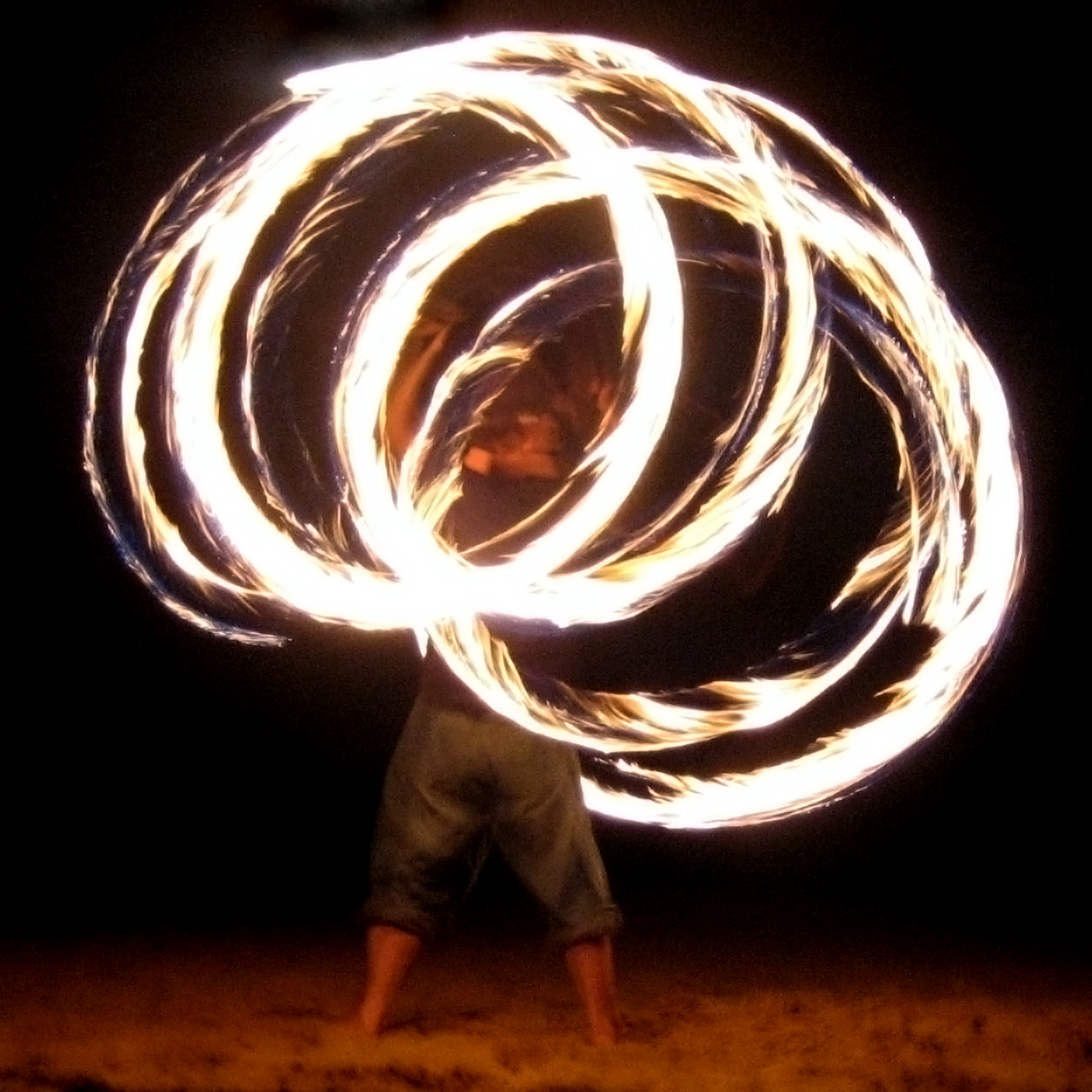
Great Balls of Fire!...fun with fireballs in the South

By Haloeffect via Wikimedia commons
When I told my ninety-one-year-old mother about a newspaper article from 1893 New Bern, North Carolina about a night's entertainment by a lantern swinger, it reminded her of a childhood memory. Kerosene balls. Kerosene what? Balls. Flaming. Flying through the air. At that point I sat down and asked for details.


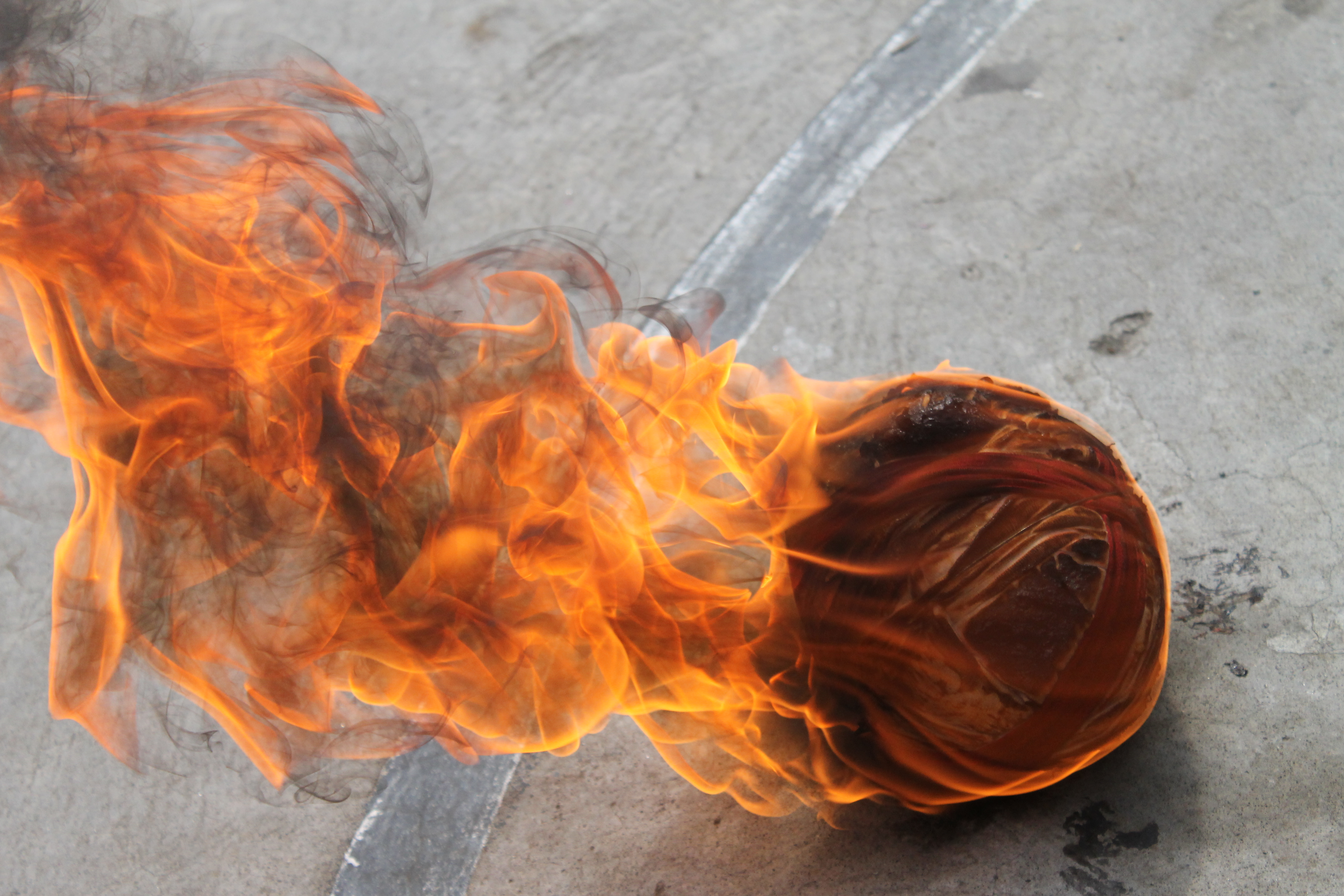
By Sebastian Ritter via Wikimedia Commons
Back in the 1920s and early 30s when Mama was a child growing up on a farm near Swansboro, North Carolina, entertainment was as homegrown as the food on their tables. On special nights like New Year's Eve and the Fourth of July, when more affluent communities paid for fireworks displays, the farmers and fishermen of coastal Carolina gathered on open expanses of farmland or sandy beaches to toss around balls of kerosene-soaked cloth or yarn. Many an old, holey sock was unraveled and wound into a tight sphere, soaked in vats of kerosene for a couple weeks, then dried and ready for fiery fun.

On the appointed night, folks would gather and watch as young men lit the kerosene balls and tossed
them into the inky darkness, usually with bare hands although they might coat their palms with dirt first. As a little girl, standing back out of harm's way watching the fireballs streak through the night sky, she found the display beautiful and exciting. I did an Internet search and found the practice is called fireballing or kerosene balling and often saw it noted as a form of entertainment in rural
By Elmer Guevara  via Wikimedia Commons
Alabama. There's a YouTube video showing a modern-day gathering of Alabama fireball tossers keeping up their family's annual tradition. In addition to tossing the balls into the air and playing flaming games of catch, there was a version called "Hail-E-Over" in which people would stand on either side of a tin-roofed house and toss a fireball over its top. The idea was to keep the ball in the air, lobbing from one side to the other until the losing side allowed the ball to thud to the ground.
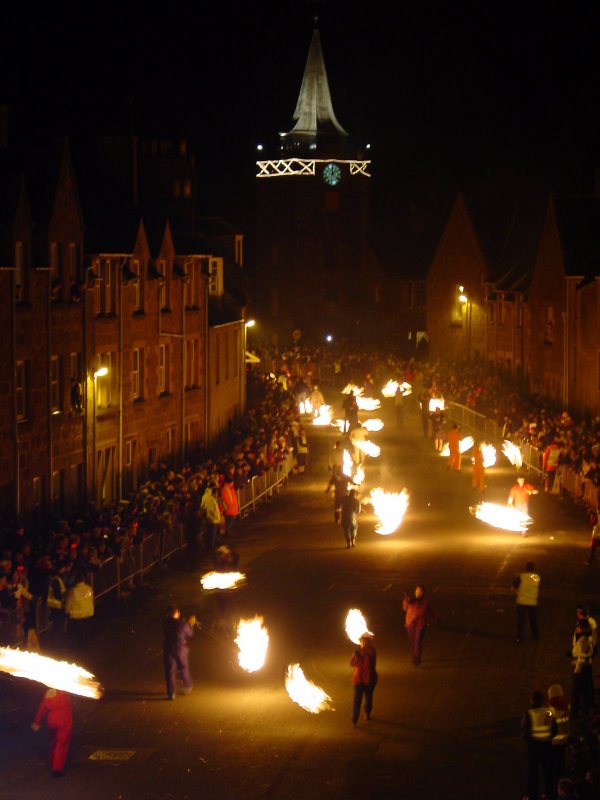
Stonehaven Parade By MrPurple , via Wikimedia Commons

The roots of such flaming entertainment may reach back to Scotland. One notable example is the annual fireball parade in Stonehaven on the night of Hogmanay (New Year's Eve.) Balls of fire encased in wire cages are swung overhead from chains as the participants process through the town. The traditional thought is that the fire burns away bad spirits of the old year, clearing the way for the new year. There's even a Stonehaven Fireballs Association!  http://stonehavenfireballs.co.uk/about
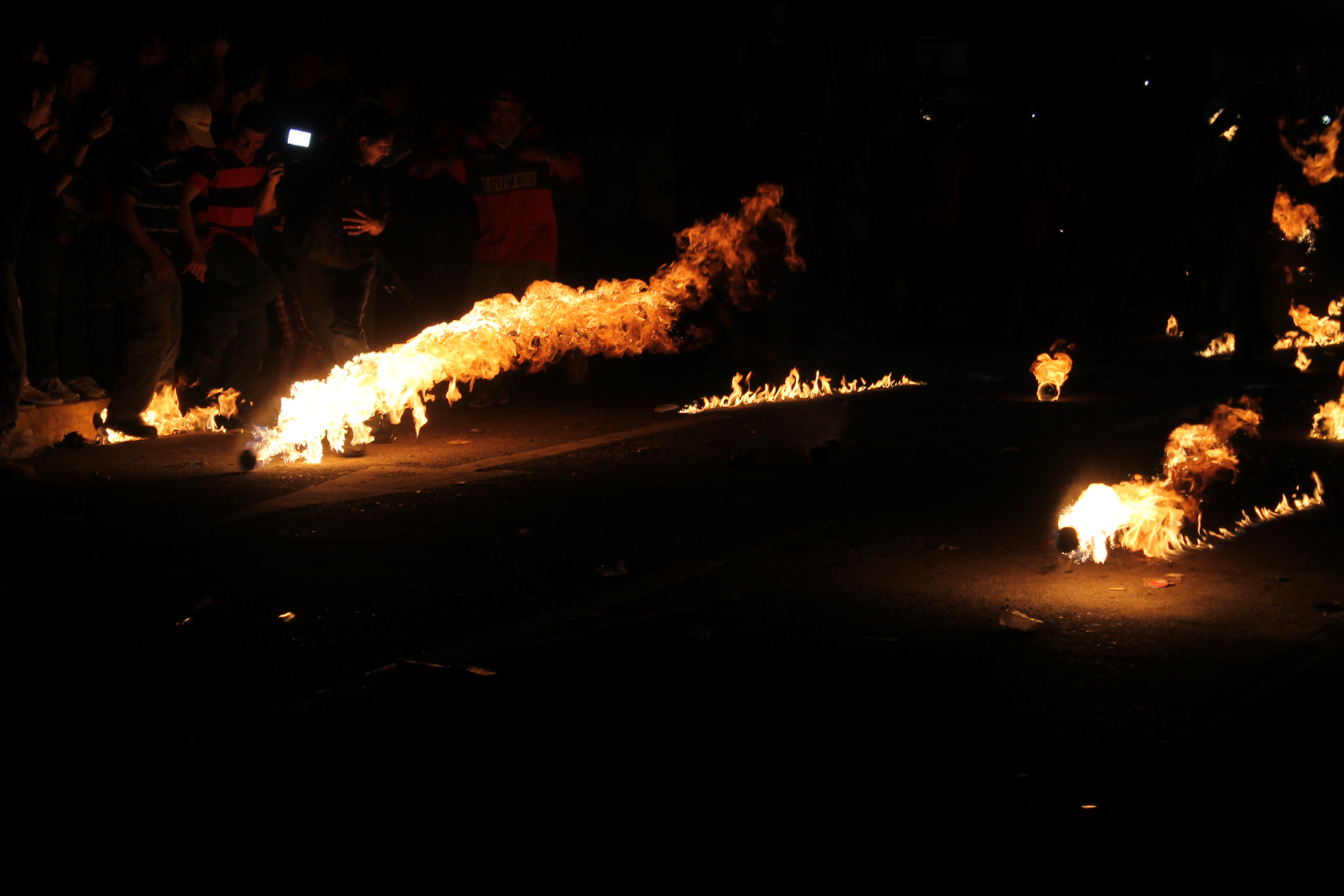
Quite a bit further south in El Salvador there is an annual Bolas de Fuego or "Balls of Fire" festival in which teams hurl kerosene-soaked flaming balls at each other. Apparently throwing fire around knows no borders!
Bolas de Fuego By Elmer Guevara via Wikimedia Commons


Have a good couple weeks, dear Reader. Thanks for stopping by...y'all come back now! (And...Remember, Only YOU, can Prevent Forest Fires!)

Kate
Smokey and Me By William Francis Ahearn (Author's Husband)


Wednesday, February 25, 2015

Men in Kilts...Scotland the Brave


A brave piper in battle, WW I (public domain)
1918--In the murky trenches of World War I France, smoke chokes the air and the sound of whizzing bullets and screaming rockets fills your head. Exhausted, running low on water, bullets, and motivation, you sink into the depths of mud and despair. Then, above the stupefying noise of battle, the skirl of bagpipes pierces through the gloom and your spirit lifts. Inching up the side of the trench you lift a cautious eye over the top and through the swirling haze you see…men in kilts and know you have a chance to survive. The Kilties have arrived and brought their centuries-old stamina, courage, and heart. 

Scots charging with bayonets, World War I. (Mary Evans Picture Library)

The age-old military tradition of
Scotland stemmed, at least in part, from its generations of inter-clan fighting, Highland versus Lowland regional squabbles, and battles with its powerful southern neighbor: England. The Scots brought, not only a joy of fighting, but loyal and courageous natures that were welcome and necessary in times of war. In 1914, at the onset of World War I, the British army was already heavy with Scottish volunteers but the threat of Germany sent out Scottish
Piper and troops at Longueval, WW I (public domain)
regiments en masse. By 1918, half of Scotland’s male population between the ages of 18 and 45, had fought in the war. An average of 15% of Scottish regiments were killed in battle compared to 13% of the British. The Scots went full out. Their regiments became clan substitutes, adding an additional layer of loyalty and sacrifice. Many of these regiments wore the traditional kilt and earned the name, Kilties. The tartan kilts added to the soldiers’ sense of pride and helped them retain their Scottish heritage, setting them apart from the English troops. Led by pipers, encouraging the men to give their all behind the blood stirring call of the bagpipes, Kilties fought with legendary bravery. It is estimated that around 1000 pipers died in the war. Scotland the brave, indeed.
Nope, nothing beneath. Brave, indeed! World War I (public domain)


And what, one might ask, did those Kilties wear beneath those knee-length kilts? Why…nothing, of course. As a matter of fact, wearing any kind of underwear beneath the kilt was considered being out of uniform and was not allowed. The only time the soldiers were to wear something modest beneath the kilt was in competitive sport such as the Highland Games and in traditional dance. (And, I believe that is the case to this day.) 

Kilties and their dog at rest, World War I (Getty Images)

 Have a good couple weeks, dear Reader. Thanks for stopping by...y'all come back now!

Kate