Showing posts with label John Lawson. Show all posts

Wednesday, December 31, 2014

In the Twelfth Month of Blogging...highlights from the past year


"Portrait of a Gentleman" by Nicolas de Largillierre.(early 1700's)
Looking back over my blog posts of 2014, I have pulled out some of my favorite discoveriesone for each monthand listed them below for your edification and enjoyment. Maybe one of these will help you win on Jeopardy someday!

Jan 8- Regarding 18th century wigs: “The powder was made of starch and was such a messy affair some wealthier homes had rooms set aside for the process (‘Powder Rooms!’)
Feb 19- Regarding 18th century love and marriage: “One of the more prevalent means was ‘handfasting’ or ‘spousal’ in which the young couple, with or without witnesses, simply held hands and promised love and loyalty, declaring themselves married. These personal ceremonies were held anywhere the couple chose and in Colonial America were often performed over an anvil in a blacksmith’s shop, symbolizing the strength of their bond.”
Portrait of an Unknown Lady of South Carolina, 1708-1709,
 by Henrietta Johnston
March 12- Regarding John Lawson’s early 18th century description of the ladies of Carolina: “ ‘As for those Women, that do not expose themselves to the Weather, they are often very fair, and generally as well featurd, as you will see any where, and have very brisk charming Eyes, which sets them off to Advantage.’ ”
April 23-  Regarding the real life “Robinson Crusoe” for which Daniel Defoe based his famous character: “As a landing boat rowed ashore, a wild-looking man clothed in goatskin, waving a white flag and yelling in excited English, came running to the shoreline. This solitary man, Alexander Selkirk, had been living alone for the previous four and half years with only the company of wild goats, rats and feral cats, the legacy left by early Spanish colonization attempts.” 
May 7- Regarding the curse Rev.George Whitefield laid upon Bath, North Carolina: “At one point, Whitefield gave up and upon leaving the town for the last time proclaimed: ‘There’s a place in the Bible that says if a place won’t listen to The Word, you shake the dust of the town off your feet, and the town
Bath, NC (KLWood, 2014)
shall be cursed. I have put a curse on this town for a hundred years.’ ”
June 4- Regarding the female pirate, Anne Bonny: “On November 18, 1720, the day Calico Jack was to be hanged from the gallows, it is reported Anne Bonny was allowed to see him one last time. Her words? ‘I’m sorry to see you here, but if you had fought like a man you need not have hanged like a dog.’ "
July 2- Regarding 18th century sea bathing machines: “The machine was basically a dressing room on wheels that was pulled into the ocean by a horse. Although there were variations, most followed this basic routine: individuals entered the beached machines, fully dressed, by climbing a set of steps and disappearing into the privacy of the wooden box.” 
Captain Lord George Graham in his Cabin, 1745, by William Hogarth
Aug 27- Regarding common expressions with nautical origins: “Pipe down - A signal on the bosun's pipe to signal the end of the day, requiring lights (and smoking pipes) to be extinguished and silence from the crew
Sept 24- Regarding the secret code of flowers:
Camellia: My destiny is in your hands 
Carnation (Pink): I’ll never forget you
Carnation (Yellow): Disdain
Dahlia (Red): Dignity and elegance
Daisy: Innocence”
Edenton's 1767 Courthouse (photo by K.L. Wood)
Oct 22- Regarding Edenton townspeople’s grisly view of justice: “Disappointed at not being able to bring the man to justice, they took his corpse to the old Courthouse, sat it up for ‘trial,’ accused and sentenced him to ‘death,’ and then carried his body back to Beverly Hall where they strung him up in a tall tree in the backyard.”
Nov 5- Regarding 18th century chocolate: “Although drinking chocolate had been the
delicious norm for centuries, did you know that, other than chocolate used to flavor baked goods, there was no form of solid “eating” chocolate prior to 1830?”
Dec 3-Regarding the years when England cancelled Christmas: “Anything smacking of
revelry was denounced and soldiers were even ordered to roam the streets sniffing out any illegal substances, ie: mincemeat pies and Christmas puddings.”
The Examination and Tryal of Father Christmas,1686, Josiah King

It’s been a fascinating year, filled with wonderful discoveries from our past. I hope your New Year is filled with joy and all that makes for a fulfilling life for you and yours.

Have a good couple weeks, dear Reader. Thanks for stopping by...Y'all come back next year now! 
Kate


Wednesday, May 7, 2014

Bath Time...an 18th century town curse or blessing?


Bath, NC (KLWood, 2014)
Recently, my husband and I made the trek down to Bath, North Carolina, just about one hour south of us here in 
Bath, NC
Edenton. Bath, created in 1705, is a fascinating place with its designation as North Carolina’s first established town and, along with many other intriguing facts, the residence of the infamous pirate captain, Edward Teach (AKA Thatch AKA Blackbeard.) Wandering along its quiet streets and down by the Pamlico River, it’s easy to envision life three centuries ago when the little town was bustling with activity including activity that inspired a visiting minister to cast a curse upon the village, but more on that later…

European settlements began growing up along the Pamlico River during the 1690s, leading to Bath’s official establishment in 1705. A collection of books sent to its St. Thomas Parish in 1701 became the origins for the colony’s first public library. (My husband, Bill, went into the Bath Public Library and speaking to one of the librarians was disappointed to learn that all but one of the original books had disappeared over the years and the one remaining book was now owned by the church and not available for public viewing.) Bath became North Carolina’s first port of entry with trade in furs, tobacco, and naval stores.

The first settlers of Bath were French
St. Thomas Church, Bath, NC, (KLWood, 2014) 
Protestants who moved down from Virginia. Early English settlers included John Lawson who was the surveyor general for the colony
of North Carolina and who designed the town’s layout. You may recall from a previous blog post --March 19, 2014-- the story of how poor John Lawson, author and happy expounder of the virtues of North Carolina (including its native Indian
Palmer House, Bath, NC, (WFAhearn, 2014)
tribes,) was killed in 1711 by the Tuscarora in a most horrific manner. 

As a matter of fact, the quiet, nearly deserted streets of Bath today, were the scenes of much political, social, and religious turmoil during its first years. The years 1711-1712 were especially challenging with the area a center of serious upheaval and strife between the Church of England’s Anglican Church and the Society of Friends (Quakers) culminating in Cary’s Rebellion. During that time, the region was also decimated by a yellow fever epidemic, severe drought, and the Tuscarora War. At one point during the war between the Indians and the colonists, Bath was the refuge for more than three hundred widows and children. Keep in mind that just four years earlier, Bath was home to only twelve houses and a total of fifty residents.
Palmer House, Bath, NC (KLWood, 2014)

As the region began putting its pieces back together following the cessation of the Tuscarora War in 1715, Bath began to flourish with increased traffic and trade once more. When Blackbeard the pirate, governor’s pardon in hand, decided to settle down, he chose the town of Bath. There, he and his rowdy crewmen became the life of the party around town, a town that is reported to have grown to a
Plum Point home of Blackbeard, seen from Bath (KLWood, 2014)
population of 8,000. Blackbeard was wined and dined by the locals who were fascinated by his wild tales of adventure and happy to do business with the reformed (so-called) pirate. He took a young wife from the Bath residents, a sixteen year old girl by the name of Mary Ormond, daughter of a nearby plantation owner. The marriage was short-lived however since, within a couple months, Blackbeard was back in the pirating trade and, in November, 1718, was killed in Ocracoke, North Carolina by orders of Virginia’s Governor Spotswood. (You may note it was not North Carolina’s governor, Charles Eden, who ordered Blackbeard’s demise. Governor Eden had actually performed the pirate’s wedding ceremony earlier in the summer.)


One of Bath’s more colorful incidents occurred during the mid-eighteenth century when the famous traveling preacher, George
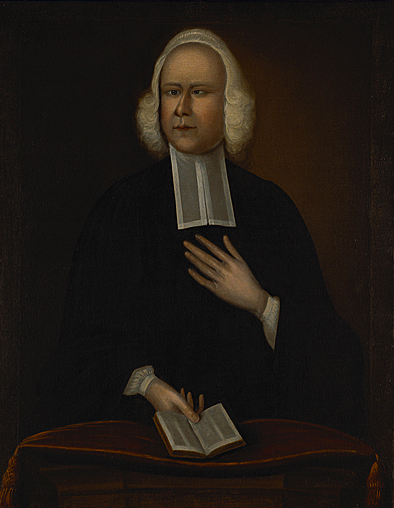
George Whitefield, 1750, by Joseph Badger
Whitefield, reportedly placed a curse upon the town. Whitefield, a minister born in England who was a famously 
impassioned leader of the religious movement in America known as the Great Awakening, and reported to have drawn ardent crowds of 8,000 at the time, visited Bath on several occasions. His manner and austere preachings against such amusements as dancing were not well received in a town with a history of prosperous trade among infamous pirates. At one point, Whitefield gave up and upon leaving the town for the last time proclaimed: “There’s a place in the Bible that says if a place won’t listen to The Word, you shake the dust of the town off your feet, and the town shall be cursed. I have put a curse on this town for a hundred years.”


A Lovely Memorial Garden in Bath, NC (KLWood, 2014)
Not long after, in 1776, the town of Washington (known by us old-timers as Little Washington) was formed fifteen miles up the Pamlico River. Once the seat of Beaufort County government was moved to Washington in 1785, Bath lost most of its trade and importance and its population decreased steadily over the years, never to return to its earlier days of prosperity and power. Today, the town’s population stands at 249. Cursed? Maybe, but some who live there might well call it blessed as they enjoy its peaceful serenity. Perhaps after such a tumultuous beginning, Bath deserves such a restful retirement.

Have a good week, dear Reader. Thanks for stopping by...Y'all come back now! 

Fanciful Floral Fire Hydrant in Bath (KLWood, 2014)


Kate


Check out :    http://www.nchistoricsites.org/bath/bath.htm

Wednesday, March 19, 2014

The Luck of the Irish...was NOT with Poor John Lawson

Portrait thought to be of John Lawson, 1700, artist unknown
I write this on the eve of St Patrick's Day to be first read on March 19 while I trust visions of all things green and lucky are still dancing in your head (and perhaps a bit of maniacal step dancing by some leaping leprechauns, as well!) At any rate, for some unknown and mysterious reason, my thoughts have turned to that most unlucky of eighteenth century fellows, John Lawson. Oh, poor John. Truly.
Title Page of John Lawson's Book


Last week's blog post featured John Lawson's glowing account of the qualities of women he discovered on his journey throughout the Carolinas in the first decade of the 1700s, published in 1709 as A New Voyage to Carolina; Containing the Exact Description and Natural History of That Country: Together with the Present State Thereof. And a Journal of a Thousand Miles, Travel'd Thro' Several Nations of Indians. Giving a Particular Account of Their Customs, Manners, &c 
See: https://archive.org/details/newvoyagetocarol00laws to view a copy of his book.

Before delving into the awful manner of Mr. 
Carolina Wildlife from John Lawson's Book
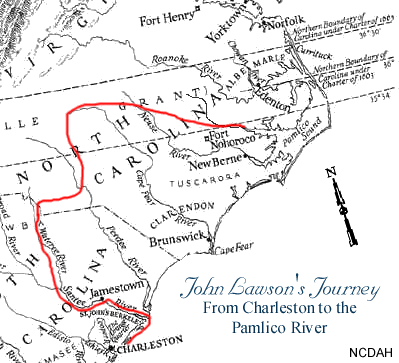
Map of John Lawson's Journey from
Lawson's demise, let me tell you a little of this remarkable man's accomplishments. In addition to exploring, what was then, a land of rough and tumble people, a land filled not only with the natural beauty and grace of its gentler inhabitants, but also with poisonous snakes, savage biting insects, and an air of lawlessness we usually attribute to the Wild West frontier days of America, John Lawson was responsible for the layout and establishment of North Carolina's oldest town, Bath, as well as for that of the town of New Bern, North Carolina. John Lawson traveled on foot and by canoe as he witnessed and recorded the amazing diversity of flora and fauna as well as the people, both native and immigrant. Note--I use the term, "Indian," here as that is how Lawson described them as opposed to today's preferred term, "Native American."--  On December 28, 1700, he, along with a crew of five Englishmen, three Indian men and one Indian woman, set out on a fifty-nine day journey snaking along rivers and trading paths beginning at what is now Charleston, South Carolina, moving in a crescent out to the piedmont region of both South and North Carolina and ending near present day Bath, on the coastal plain. Although probably about five hundred miles as flies the proverbial crow, his trip took such a circuitous route, his claim of a thousand miles is not unwarranted. His descriptions of the many Indian tribes he encountered (often a different one for each river) were, though sometimes colored with his bemusement, most often respectful, sometimes comparing them favorably to his fellow countrymen (and women.) To quote Lawson, with modern spelling:

Amongst (Indian) women, it seems impossible to find a Scold: if they are provoked, or affronted, by their Husbands, or some other, they resent the Indignity offered them in silent tears, or by refusing their Meat. Would some of our European Daughters of Thunder set these Indians for a pattern, there might be more quiet Families found amongst them, occasioned by that unruly Member, the Tongue.

Lawson did not limit his praise to the fairer sex, however, and although he referred to the native people as savages, he often remarked they were less savage in some ways than their Old World counterparts. His praise of the native peoples is all the more ironic in that his death was at the hands of the Tuscarora, whom he acknowledged with sympathy and respect in his book.
Tuscarora Warrior, artist unknown

in 1711, on the verge of war against the colonists, some of the Tuscarora looked upon Lawson as an agent representing people who were the source of terrible injustice and mistreatment of the natives. Not only had Indian lands been confiscated but many Indian women and children had been taken as slaves. Lawson, for all his close interaction with the Indians, appeared unaware of their belief that he was actually working against them. In mid-September, during a time simmering with hostility, John Lawson placed himself in the heart of Indian country as he took an expedition trip along the Neuse River to find a quicker route through North Carolina to the Virginia border. He was captured by Tuscarora warriors and subsequently killed. Baron Christoph Von Graffenried and his slave who accompanied Lawson on that fateful trip were eventually released by their captors and the baron's own illustration of the event is included in today's post. For those with a weak stomach or prone to nightmares, I seriously suggest you stop reading the remainder of this post. I am not being humorous and I certainly want the Reader to understand the grave and graphic nature of the description passed down to us from centuries past. Although it may have been embellished for reasons of propaganda, the methods described match those Lawson, himself, recorded during his time among the Tuscarora. So, here goes:
The Death of John Lawson, 1711, by Baron Christoph Von Graffenried

Splinters made from pitch pine were stuck into Lawson's skin covering his entire body. The horrible pain this caused was then increased a thousand fold when the splinters were set ablaze and the unfortunate man was burned alive. To quote Marjorie Hudson in her article, "Among the Tuscarora: The strange and mysterious death of John Lawson, gentleman, explorer, and writer," reprinted at http://www.learnnc.org/lp/pages/1645  from its original publication in North Carolina Literary Review, Vol. 1, No. 1, Summer 1992: 

His bleeding skin numbed by pitch pine, he begins to feel the heat on the skin of his legs and feet, the rush upward, the death dance now frenzied in his limbs, the last sight of this world framed in fire, and, finally, the soul escaping into a heavenly place like Eden, like the New World when it was still young, belonging to itself alone, a land that fulfills all expectations of balance, of beauty, of perfect enmity.

This terrible event preceded a war between the Tuscarora and the colonists which after two dreadful years ended with all of that tribe either killed, taken as slaves, or fled northward out of the Carolinas.

Have a good week, dear Reader. Thanks for stopping by...Y'all come back now! (And may we learn from the past.)

Kate