|
| "Portrait of a Gentleman" by Nicolas de Largillierre.(early 1700's) |
Looking back over my blog posts of 2014, I have pulled out some of my
favorite discoveries, one for each month, and listed them below for your edification and enjoyment. Maybe one of
these will help you win on Jeopardy someday!
Jan 8- Regarding 18th century wigs: “The powder was made of
starch and was such a messy affair some wealthier homes had rooms set aside for
the process (‘Powder Rooms!’)”
Feb 19- Regarding 18th century love and marriage:
“One of the more prevalent means was ‘handfasting’ or ‘spousal’ in which the
young couple, with or without witnesses, simply held hands and promised love
and loyalty, declaring themselves married. These personal ceremonies were held
anywhere the couple chose and in Colonial America were
often performed over an anvil in a blacksmith’s shop, symbolizing the strength
of their bond.”
 |
| Portrait of an Unknown Lady of South Carolina, 1708-1709, by Henrietta Johnston |
March 12- Regarding John Lawson’s early 18th century
description of the ladies of Carolina: “ ‘As for those Women, that do not
expose themselves to the Weather, they are often very fair, and generally as
well featurd, as you will see any where, and have very brisk charming Eyes,
which sets them off to Advantage.’ ”
April 23- Regarding the real
life “Robinson Crusoe” for which Daniel Defoe based his famous character: “As
a landing boat rowed ashore, a wild-looking man clothed in goatskin, waving a
white flag and yelling in excited English, came running to the shoreline. This
solitary man, Alexander Selkirk, had been living alone for the previous four
and half years with only the company of wild goats, rats and feral cats, the
legacy left by early Spanish colonization attempts.”
May 7- Regarding the curse
Rev.George Whitefield laid upon Bath, North Carolina: “At one point, Whitefield gave up and upon leaving the town
for the last time proclaimed: ‘There’s a place in the Bible that says if a
place won’t listen to The Word, you shake the dust of the town off your feet,
and the town
shall be cursed. I have put a curse on this town for a hundred
years.’ ”
 |
| Bath, NC (KLWood, 2014) |
June 4- Regarding the female
pirate, Anne Bonny: “On November
18, 1720, the day Calico Jack was to be hanged from the gallows, it is reported
Anne Bonny was allowed to see him one last time. Her words? ‘I’m sorry to see
you here, but if you had fought like a man you need not have hanged like a
dog.’ "
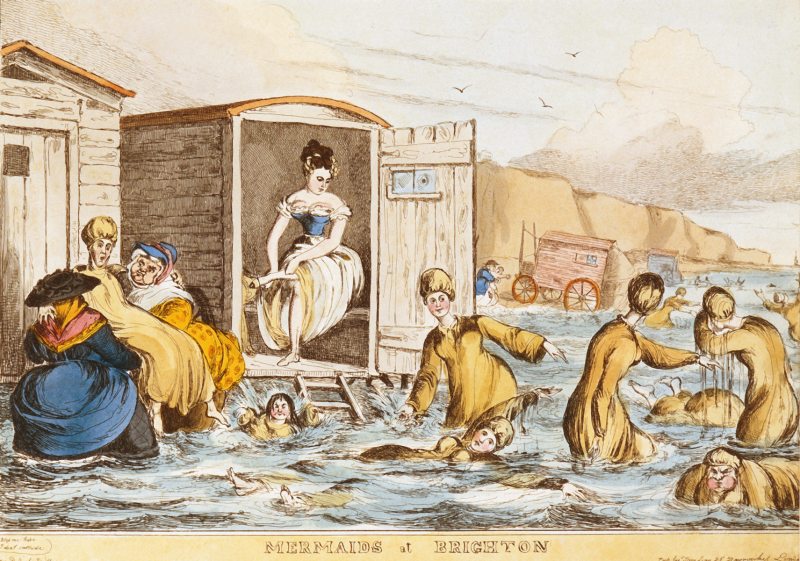
July 2- Regarding 18th
century sea bathing machines: “The
machine was basically a dressing room on wheels that was pulled into the ocean
by a horse. Although there were variations, most followed this basic routine:
individuals entered the beached machines, fully dressed, by climbing a set of
steps and disappearing into the privacy of the wooden box.”
 |
| Captain Lord George Graham in his Cabin, 1745, by William Hogarth |
Aug 27- Regarding common expressions with nautical
origins: “Pipe down - A signal on the bosun's pipe to
signal the end of the day, requiring lights (and smoking pipes) to be
extinguished and silence from the crew
Sept 24- Regarding the secret code of flowers:
“Camellia: My destiny is
in your hands
Carnation (Pink): I’ll never forget you
Carnation (Yellow): Disdain
Dahlia (Red): Dignity and elegance
Daisy: Innocence”
 |
| Edenton's 1767 Courthouse (photo by K.L. Wood) |
Oct 22- Regarding Edenton
townspeople’s grisly view of justice: “Disappointed at not being able to bring the man to justice, they took
his corpse to the old Courthouse, sat it up for ‘trial,’ accused and sentenced
him to ‘death,’ and then carried his body back to Beverly Hall where they
strung him up in a tall tree in the backyard.”
Nov 5- Regarding 18th
century chocolate: “Although
drinking chocolate had been the
delicious norm for centuries, did you know
that, other than chocolate used to flavor baked goods, there was no form of
solid “eating” chocolate prior to 1830?”
Dec 3-Regarding the years
when England cancelled Christmas: “Anything
smacking of
 |
| The Examination and Tryal of Father Christmas,1686, Josiah King |
It’s been a fascinating year, filled with wonderful discoveries from our
past. I hope your New Year is filled with joy and all that makes for a
fulfilling life for you and yours.
Have a good couple weeks, dear Reader. Thanks
for stopping by...Y'all come back next year now!
Kate