Showing posts with label coffee. Show all posts

Wednesday, September 30, 2015

Throw the Salt...and blind the devil

"At the Cafe La Mie" by Henri de Toulouse-Lautrec, 1891
Having just baked a Muscadine pie in celebration of the Full/Harvest/Super/Lunar Eclipsing Moon, I got to thinking about the legend and lore of the foods we eat. Something so much a part of our everyday lives is bound to get tied up in our tangle of hopes, fears, joys, and sorrows. Perhaps that is one of the things that marks us as 'human." I mean, after all, what other creature stops to ponder which way to eat the food before them. They just eat! On second thought, I know plenty of people who never spend a moment on culinary contemplation-- they just dive in. But, if you want to be on the safe side, read this compilation of a few food related superstitions. There just might be a "kernel" of truth hidden there!

Salt: Spilling salt is bad luck. (Perhaps this began in the days of yore when salt was a very
"Salt Shaker" photo by Garitzco via Wikimedia Commons
expensive and treasured commodity, not only for flavor enhancement but for longterm food preservation.) Once you've spilled the salt, to prevent the devil from stealing your soul--bad luck in anyone's book--you must take some salt in your right hand and throw it over your left shoulder. This effectively blinds the devil and thwarts his soul-stealing plans.


Bread: The devil shows up here as well. This time he sits on top of your unbaked bread as you put it in the oven preventing it from rising properly. The solution? Cut a cross into the top before baking and that pesky kitchen-dwelling demon has nowhere to sit. Hot Cross Buns, anyone?


"Carton of Eggs" photo by By Gisela Francisco via Wikimedia Commons
Eggs: An obvious symbol of fertility. Broken eggs are a normal part of farm life but don't just toss them on the compost pile, scatter them in your fields to encourage an abundant crop. If you crack open an egg and find you are blessed with a double-yoker, it means either someone you know is going to get married...or have twins...or both. And once you've cracked that illustrious shell (any egg, not just the double-yoker) be sure and completely crush the shell so a witch cannot gather up the pieces, make them into a boat and sail out onto the sea with the intent of stirring up terrible storms.

Rice: Another symbol of fertility and the reason for tossing it at the happy newlyweds as they leave the wedding celebration. Better than throwing eggs at them.

Noodles: In China, long noodles represent a long life so cutting them cuts your life short. Remember when you were a kid and got those hard looks from your mother when you delighted in sucking up your spaghetti noodle in one long, uninterrupted slurp? Well, little did you know you were preventing premature death! Now, that's using your noodle.
"Pouring Tea" by William Worcester Churchill (1858-1926)

Tea: It's bad luck to have more than one person pour tea from the pot. Perhaps that's the origin of the quaint British custom of asking "Shall I be Mother?" when offering to serve the tea.

Coffee: If you find bubbles in your brew, catch them on a spoon and eat them so you will come into money. (How do you eat a bubble?)


"Black-eye Peas and Collard Greens" photo by Leslie Seaton
 via Wikimedia commons
Black-eyed Peas and Collard Greens: This one, I grew up with here in the South. Eating black-eyed peas and collards on New Year's Day brings you wealth all through the year. Peas represent coins and collards represent the folding stuff. Of course with inflation, you have to eat a heck of a lot of peas and collards these days.

Apples: Cut open an apple and count the seeds. That's how many children you'll have!

Onions: To keep evil spirits out of your house, stick pins into a small onion and set it on your windowsill.

Pie: Bake a pie made with Muscadine grapes on the day of the full Harvest Moon in
"Kate's Good Luck Muscadine Pie" photo by KL Wood
September and you will have good luck for the rest of the season. Eat all of it the day you bake it and you will have good luck for the rest of the year. OK...I confess...I made that one up. But, hey, superstitions have to get started somewhere and it's a good excuse to eat pie. Some might even say having pie is the result of good luck. Hmmm...which came first, the chicken or the egg? Better just bake your pie and eat it too.


Have a good couple weeks, dear Reader. Thanks for stopping by...y'all come back now! 

Kate


Wednesday, November 5, 2014

What to Drink After Colonial Tea Parties?...revolutionary thirst quenchers

The Destruction of Tea at Boston Harbor, 1846 by Nathaniel Currier
Here, in Edenton, North Carolina, the month of October, 2014, was set aside to commemorate one of the first organized political actions by a group of American women: the Edenton Tea Party. On October 25, 1774 (ten months after the famous Boston Tea Party in which male colonists disguised themselves as Mohawk Indians and dumped shiploads of tea into Boston Harbor,) Edenton's Penelope Barker organized a tea party of 51 ladies who signed a petition addressed to King George, pledging a boycott against the purchasing
Penelope Barker, 18th cent, artist unknown
of tea and cloth imported from England. The protests were spurred by The Tea Act in which England imposed a tax on tea bought by the colonists. Although the tax placed upon the tea was actually lower than it had been in the past, it was the notion of “taxation without representation” that fueled the patriotic protests.

Penelope Barker is a fascinating subject and I will dedicate a post to her at some time in the near future. But for now, I’ve been pondering what took the place of tea in America once its consumption was deemed unpatriotic.
In 1773, Susannah Clarke penned the following:

We’ll lay hold of card and wheel,
And join our hands to turn and reel;
We’ll turn the tea all in the sea,
And all to keep our liberty.
We’ll put on our homespun garbs
And make tea of our garden herbs,
When we are dry, we’ll drink small beer
And freedom shall our spirits cheer.

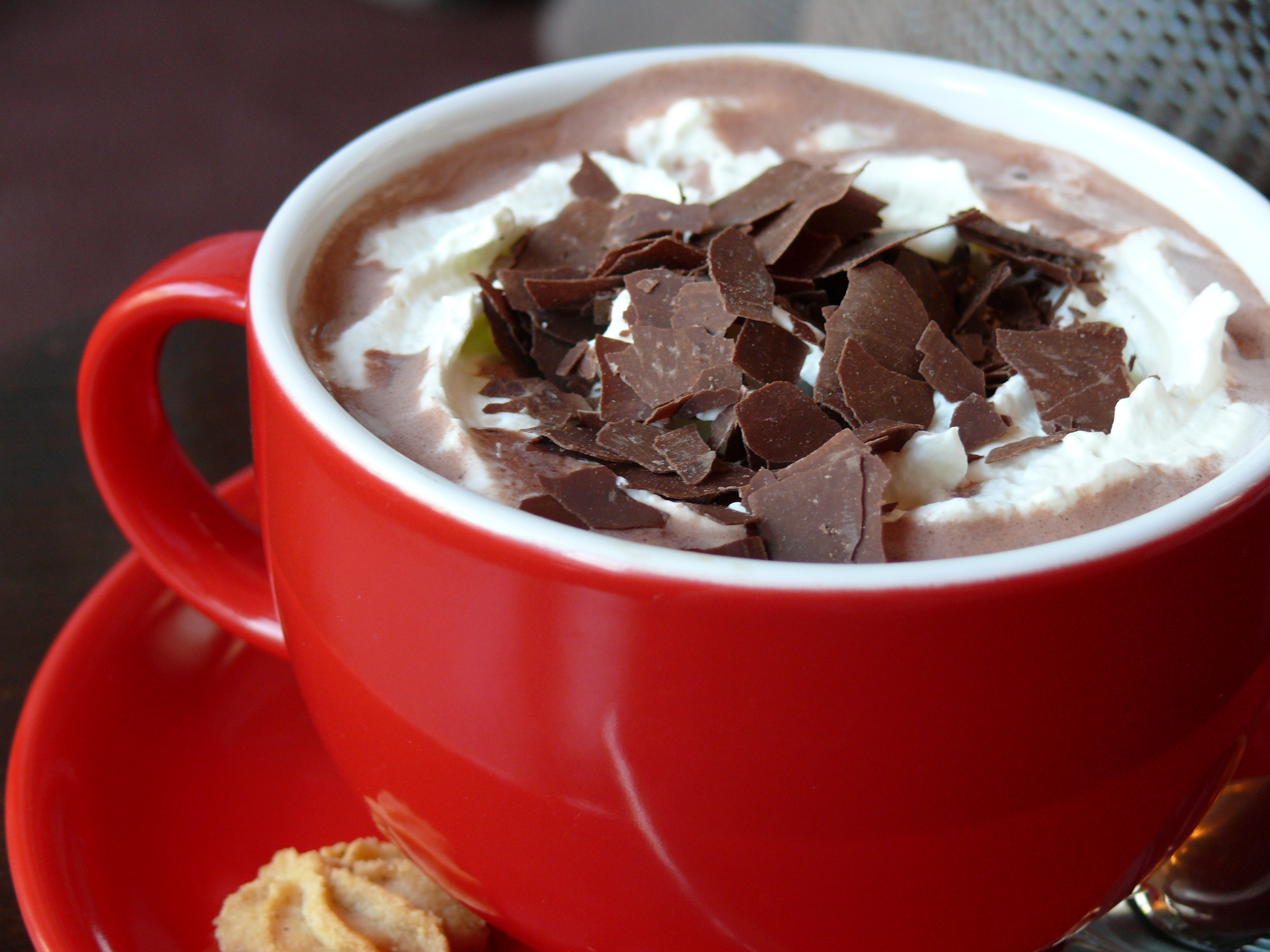
Schokolode by By Itisdacurlz via Wikimedia Commons
As alluded to in Mrs. Clarke’s poem, herbal teas brewed from native American roots and plants, and small beer (the Colonial version, made with very low alcohol content) were two beverages of choice. In addition, coffee gained great popularity (to this day, still ranking higher than tea consumption on the western side of “The Pond,”) and my personal favorite, chocolate, maintained its place at Colonial American tables. (***Interesting Chocolate Factoid!*** Although drinking chocolate had been the delicious norm for centuries, did you know that, other than chocolate used to flavor baked goods, there was no form of solid “eating” chocolate prior to 1830? A big “Thank You” to England’s Joseph Fry and Sons for all the leftover chocolate Halloween candy taking space in my cupboard! Of course, it won’t be there for long.)

Mint Tea By Onderwijsgek via Wikimedia Commons
The non-tea “teas” brewed in the Revolutionary era, were often made by steeping the leaves of strawberry, rhubarb, blackberry, or goldenrod plants. One favorite was called “Balsamic Hyperion” brewed from dried raspberry leaves and another called “Liberty Tea,” was made from the leaves of a plant aptly named loosestrife.

Well, time for a cup of tea, I think…or coffee…or maybe small beer…or hot chocolate. Yeah, definitely chocolate! (Just for research purposes, of course…) 


Have a good couple weeks, dear Reader. Thanks for stopping by...Y'all come back now!
Kate