Showing posts with label Edenton Tea Party. Show all posts

Wednesday, November 5, 2014

What to Drink After Colonial Tea Parties?...revolutionary thirst quenchers

The Destruction of Tea at Boston Harbor, 1846 by Nathaniel Currier
Here, in Edenton, North Carolina, the month of October, 2014, was set aside to commemorate one of the first organized political actions by a group of American women: the Edenton Tea Party. On October 25, 1774 (ten months after the famous Boston Tea Party in which male colonists disguised themselves as Mohawk Indians and dumped shiploads of tea into Boston Harbor,) Edenton's Penelope Barker organized a tea party of 51 ladies who signed a petition addressed to King George, pledging a boycott against the purchasing
Penelope Barker, 18th cent, artist unknown
of tea and cloth imported from England. The protests were spurred by The Tea Act in which England imposed a tax on tea bought by the colonists. Although the tax placed upon the tea was actually lower than it had been in the past, it was the notion of “taxation without representation” that fueled the patriotic protests.

Penelope Barker is a fascinating subject and I will dedicate a post to her at some time in the near future. But for now, I’ve been pondering what took the place of tea in America once its consumption was deemed unpatriotic.
In 1773, Susannah Clarke penned the following:

We’ll lay hold of card and wheel,
And join our hands to turn and reel;
We’ll turn the tea all in the sea,
And all to keep our liberty.
We’ll put on our homespun garbs
And make tea of our garden herbs,
When we are dry, we’ll drink small beer
And freedom shall our spirits cheer.
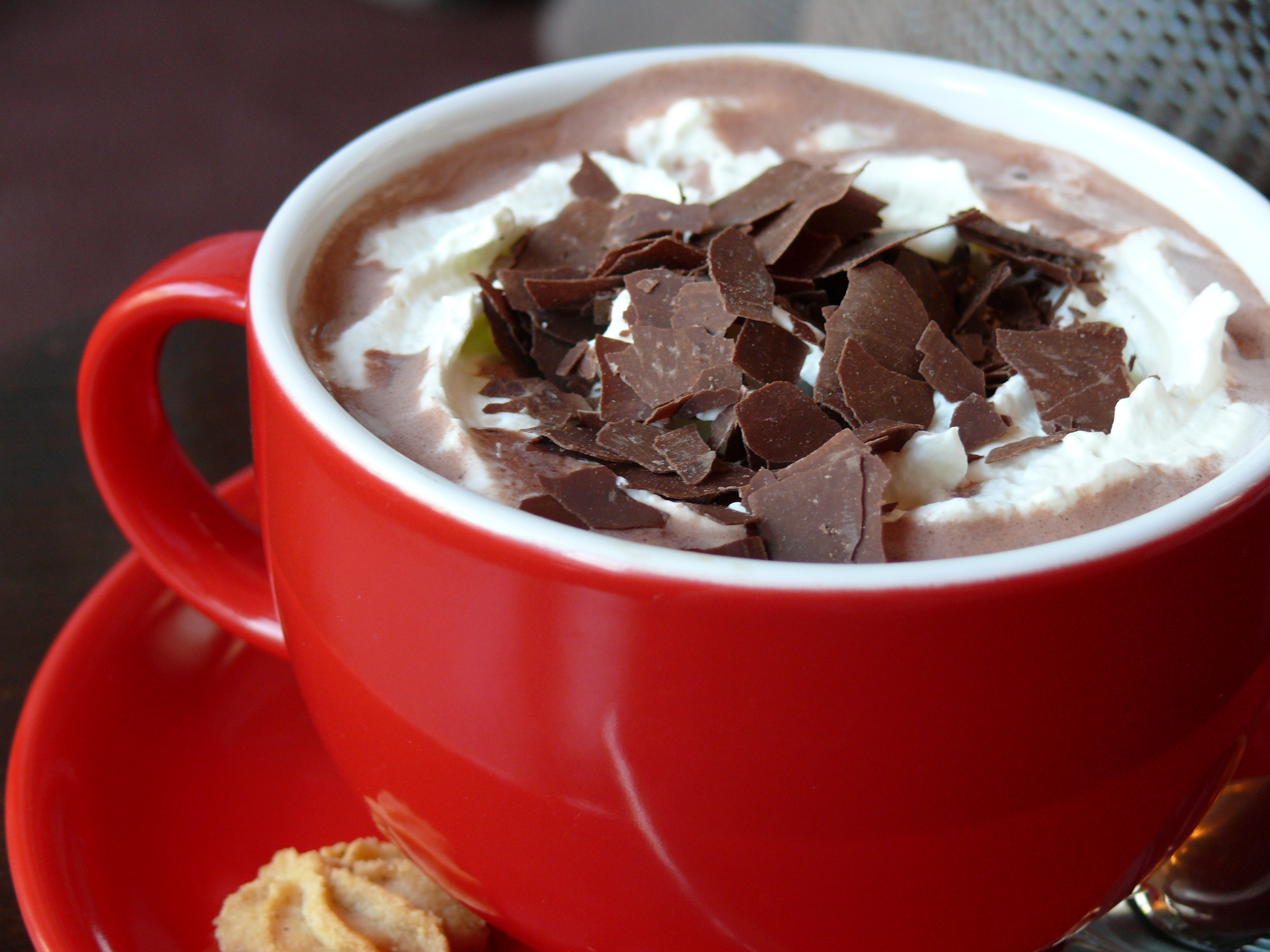
Schokolode by By Itisdacurlz via Wikimedia Commons
As alluded to in Mrs. Clarke’s poem, herbal teas brewed from native American roots and plants, and small beer (the Colonial version, made with very low alcohol content) were two beverages of choice. In addition, coffee gained great popularity (to this day, still ranking higher than tea consumption on the western side of “The Pond,”) and my personal favorite, chocolate, maintained its place at Colonial American tables. (***Interesting Chocolate Factoid!*** Although drinking chocolate had been the delicious norm for centuries, did you know that, other than chocolate used to flavor baked goods, there was no form of solid “eating” chocolate prior to 1830? A big “Thank You” to England’s Joseph Fry and Sons for all the leftover chocolate Halloween candy taking space in my cupboard! Of course, it won’t be there for long.)

Mint Tea By Onderwijsgek via Wikimedia Commons
The non-tea “teas” brewed in the Revolutionary era, were often made by steeping the leaves of strawberry, rhubarb, blackberry, or goldenrod plants. One favorite was called “Balsamic Hyperion” brewed from dried raspberry leaves and another called “Liberty Tea,” was made from the leaves of a plant aptly named loosestrife.

Well, time for a cup of tea, I think…or coffee…or maybe small beer…or hot chocolate. Yeah, definitely chocolate! (Just for research purposes, of course…) 


Have a good couple weeks, dear Reader. Thanks for stopping by...Y'all come back now!
Kate

Wednesday, May 28, 2014

Living in an 18th century town...a historical novelist's dream

The Barker House, 1775
Two years ago, we moved from the relative noise and bustle of Virginia Beach, Virginia to the peaceful quiet of Edenton, North Carolina. How amazing it is to walk these streets and see homes built in the 1700s still occupied today, not as roped off museum pieces or reproductions but as living breathing examples of 18th century life. As a matter of fact, it was recently discovered that the oldest known house in the state of North Carolina (circa 1712) was hiding beneath a veneer of asbestos shingles on one of the town streets. Our
The Cupola House, 1757
own little cottage doesn't go back that far but even at its "youthful" age of 114, it carries a spirit of history, charm, and continuity not found in contemporary housing. As a writer of historical fiction, it's like waking each day inside a dream, inspiration singing from every corner of the town. I tell our out-of-town friends we are the only town I know with its own soundtrack. Several times each day, the carillon of First Baptist Church rings out lovely melodies of hymns and classical music wafting on the light breezes of Edenton Bay.


The West Customs House, 1772
Commemorative Teapot and a Satirical Drawing of the
1774 Edenton Tea Party from a London newspaper, 1775
Edenton was officially incorporated as a town in 1712. Its name changed four times over its first ten years: The Towne on Queen Anne's Creek, Ye Towne on Mattercommack Creek, The Port of Roanoke, and finally ending as Edenton when named for Governor Charles Eden upon his death in 1722. In the 1770s,  

Edenton was at the forefront of protests against unfair taxing by England. On October 25, 1774, the first ever organized political action by American women, the Edenton Tea Party, occurred when fifty-one ladies of the town met at the home of Elizabeth King and signed a resolution to no longer drink tea or purchase English made cloth
until the tax acts were repealed. In March, 1775, a very unflattering
political cartoon appeared in a London newspaper meant to embarrass and degrade the ladies' efforts.
The Joseph Hewes House, 1765

Edenton is filled to the brim with historical homes and buildings built from the 18th to the 20th centuries but I will focus today on those of the 1700s. I am including photographs I shot this week of just a few of those wonderful structures, all of which are private residences with the exception of the Chowan County Courthouse and the Barker and Cupola Houses.

For more information see: http://www.visitedenton.com/
Chowan County Courthouse, 1767


The Bennett House, 1780
The Skinner-Paxton House, 1798
The Charlton House, 1765
The Author's Home, Buttercup Cottage, 1900


Have a good week, dear Reader. Thanks for stopping by...Y'all come back now! 

Kate

(All photographs in today's post taken by Kathryn Louise Wood.)