Wednesday, May 28, 2014

Living in an 18th century town...a historical novelist's dream

The Barker House, 1775
Two years ago, we moved from the relative noise and bustle of Virginia Beach, Virginia to the peaceful quiet of Edenton, North Carolina. How amazing it is to walk these streets and see homes built in the 1700s still occupied today, not as roped off museum pieces or reproductions but as living breathing examples of 18th century life. As a matter of fact, it was recently discovered that the oldest known house in the state of North Carolina (circa 1712) was hiding beneath a veneer of asbestos shingles on one of the town streets. Our
The Cupola House, 1757
own little cottage doesn't go back that far but even at its "youthful" age of 114, it carries a spirit of history, charm, and continuity not found in contemporary housing. As a writer of historical fiction, it's like waking each day inside a dream, inspiration singing from every corner of the town. I tell our out-of-town friends we are the only town I know with its own soundtrack. Several times each day, the carillon of First Baptist Church rings out lovely melodies of hymns and classical music wafting on the light breezes of Edenton Bay.


The West Customs House, 1772
Commemorative Teapot and a Satirical Drawing of the
1774 Edenton Tea Party from a London newspaper, 1775
Edenton was officially incorporated as a town in 1712. Its name changed four times over its first ten years: The Towne on Queen Anne's Creek, Ye Towne on Mattercommack Creek, The Port of Roanoke, and finally ending as Edenton when named for Governor Charles Eden upon his death in 1722. In the 1770s,  

Edenton was at the forefront of protests against unfair taxing by England. On October 25, 1774, the first ever organized political action by American women, the Edenton Tea Party, occurred when fifty-one ladies of the town met at the home of Elizabeth King and signed a resolution to no longer drink tea or purchase English made cloth
until the tax acts were repealed. In March, 1775, a very unflattering
political cartoon appeared in a London newspaper meant to embarrass and degrade the ladies' efforts.
The Joseph Hewes House, 1765

Edenton is filled to the brim with historical homes and buildings built from the 18th to the 20th centuries but I will focus today on those of the 1700s. I am including photographs I shot this week of just a few of those wonderful structures, all of which are private residences with the exception of the Chowan County Courthouse and the Barker and Cupola Houses.

For more information see: http://www.visitedenton.com/
Chowan County Courthouse, 1767


The Bennett House, 1780
The Skinner-Paxton House, 1798
The Charlton House, 1765
The Author's Home, Buttercup Cottage, 1900


Have a good week, dear Reader. Thanks for stopping by...Y'all come back now! 

Kate

(All photographs in today's post taken by Kathryn Louise Wood.)

Wednesday, May 21, 2014

When is a Shrub, not a Bush?...when it's a tasty 18th century strawberry concoction

Strawberries Picked by Author and her Mother, by KLWood (2014)
Here in coastal North Carolina, May is prime strawberry-picking time and my ninety-year-old mother never misses the chance to pick some herself. She is visiting with us this week so it was the perfect excuse (who really needs an excuse, anyway!) to grab some buckets and head for a pick-your-own strawberry farm. Past fields of beautiful white and purple blooming clary sage and the sunshine gold of rape fields, we headed for Triple B Farms, about seventeen miles north of
Clary Sage, by KLWood (2014)
Edenton. Rape, from which canola oil is derived, and clary sage, which is used in the cosmetics and perfume industries, are relatively new cash crops for this part of North Carolina, filling some of the fields used to raise tobacco in a bygone era. Tobacco still grows here but, oh, what a lovely substitute are these flowering newcomers!


Rape Flowers, by KLWood (2014)
While preparing our strawberry shortcakes, I wondered how our 18th century ancestors used these luscious, ruby berries. I ran across an intriguing process, popular in the 1700s, that produced something called a "shrub," (from the Arabic word, sharab, meaning "to drink,") also known as a "drinking vinegar." Without modern refrigeration, vinegar was often used as a means of preserving foods and this concoction took full advantage of the tangy sweet and sour marriage of vinegar and berries. My research also informed me that shrubs have recently regained popularity and used as an ingredient in making trendy cocktails. 18th century shrubs were made in both alcoholic and non-alcoholic versions. So, for your drinking pleasure, I happily present you with a recipe for an 18th century Strawberry Shrub adapted from a recipe by Ellen Jackson at http://www.culinate.com/articles/features/shrub_love

Strawberry Shrub, photo from: http://fromwhichthingsgrow.blogspot.com/

Strawberry Shrub

3 to 4 cups fresh strawberries, washed, stemmed, and cut in 1-inch chunks if necessary
2 to 2½ cups sugar
2 cups vinegar (white wine vinegar)
Aromatics (for herbs, several sprigs or a modest handful of leaves; for spice, 1 to 2 tablespoons, depending on strength/flavor)

Combine the fruit and sugar in a wide-mouth glass jar. Use a muddler or wooden spoon to apply gentle yet firm pressure, enough to break up the fruit. Cover the jar with a lid or plastic wrap and let it sit in a cool, dark place for at least 5 or 6 hours, or up to 24 hours.
After 24 hours, add the vinegar and aromatics, stir until the sugar has dissolved, and return, covered, to a cool, dark spot (or the refrigerator) for a week or slightly longer, until the flavor is fully realized.
After a week, or when the flavor is to your liking, press and strain the contents of the jar through cheesecloth or a fine-mesh sieve, pressing lightly to release all of the liquid from the fruit. Store in a clean container in the refrigerator for another week, or until the flavor of the vinegar mellows and fades into the background.
The shrub will keep in the refrigerator for up to 6 months. Serve it with sparkling or still water, over ice, or create your own cocktail by mixing the shrub with a spirit of your choice.

Have a good week, dear Reader. Thanks for stopping by...Y'all come back now! 
The Author and her Mother Picking Strawberries, by WFAhearn (2014)


Kate

Wednesday, May 14, 2014

18th Century Maternity Fashions...what they wore while waiting

Sarah Churchill, 1700, after Sir Godfrey Knelle (is she, or isn't she?)
Over the years I have seen maternity styles change from those of my child-bearing years when we wore loose-fitting dresses or loose-fitting tops over skirts or pants with stretchy panels that we pulled over our bulging bellies, to those of my daughters' generation in which snug-fitting, stretchy dresses or snug-fitting, stretchy tops are worn over skirts or pants whose waistbands fit just below the bulging bellies. With Mother's Day, just passed, it made me ponder what our pregnant 18th century ancestresses wore while awaiting the big day.


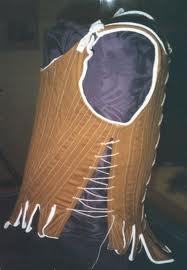
Replica of 18th century maternity corset (http://yeoldefashion.tumblr.com)
With the lack of modern methods of birth control as well as the need for birthing large numbers of babies to ensure enough survived to help out on the farm or even to carry on the family name or business, the 18th century woman often found herself in a state of pregnancy. You might consider some of these dear ladies, chronically pregnant (and, unfortunately, sometimes terminally pregnant with maternal death in childbirth not an uncommon occurrence.)  So, what did the well-dressed woman in the "family way" wear in an era of tight corsets? 


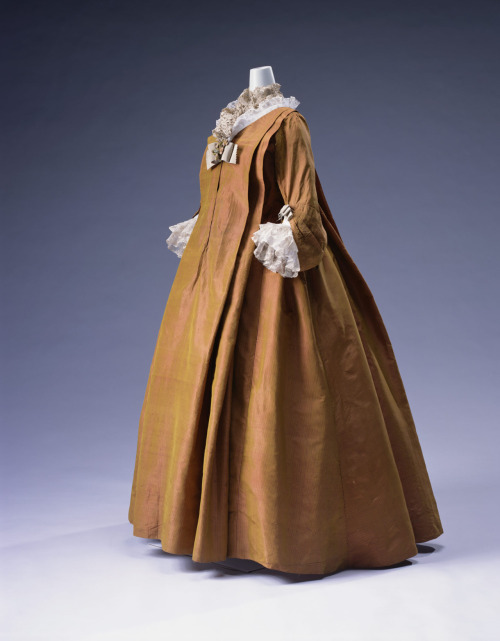
Robe Volante, 1720, Kyoto Costume Institute
Natalia Alexeievna, by Alexander Roslin, 1775
Until late in the 18th century, stiff corsets with equally stiff stays were the everyday wear of all women, whether high-born aristocrat or hard-working kitchen maid. Unlike those crazy folks of fashion in the later Victorian era who continued to wear tight bindings throughout pregnancy, 18th century women were free to at least loosen their corsets to accommodate their expanding waistlines and growing babies. There were corsets made especially for maternity wear that not only laced up in the back, as usual, but also up the front and both sides. Much clothing was pinned and tied together so the lady "in waiting" could adjust her gowns and bodices accordingly. Some fashions of the early 18th century provided convenient camouflage of the burgeoning baby-bellies. One of these was called robe volante, a loose fitting over-dress that was, at first, deemed appropriate as in-home or informal wear, but later worn in more formal settings among both pregnant and non-pregnant women. Some women customized their husbands' long waist-coats to wear over their gowns and petticoats. If the triangular-shaped fabric called a stomacher, which was pinned to the front of the bodice covering the corset, became too small for madam, she could drape long scarves in front to hide the corset.


I am certain many a lady breathed (literally) a sigh of relief when 1800 brought about the temporary end of the corseted stays and the fashion became loose, flowing empire-waisted gowns, a comfortable style for ladies no matter their state of maternity (or lack, thereof.) 


Have a good week, dear Reader. Thanks for stopping by...Y'all come back now! 

Kate
Portrait of María Luisa de Borbón y Vallabriga by  Francisco Goya, 1800


Wednesday, May 7, 2014

Bath Time...an 18th century town curse or blessing?


Bath, NC (KLWood, 2014)
Recently, my husband and I made the trek down to Bath, North Carolina, just about one hour south of us here in 
Bath, NC
Edenton. Bath, created in 1705, is a fascinating place with its designation as North Carolina’s first established town and, along with many other intriguing facts, the residence of the infamous pirate captain, Edward Teach (AKA Thatch AKA Blackbeard.) Wandering along its quiet streets and down by the Pamlico River, it’s easy to envision life three centuries ago when the little town was bustling with activity including activity that inspired a visiting minister to cast a curse upon the village, but more on that later…

European settlements began growing up along the Pamlico River during the 1690s, leading to Bath’s official establishment in 1705. A collection of books sent to its St. Thomas Parish in 1701 became the origins for the colony’s first public library. (My husband, Bill, went into the Bath Public Library and speaking to one of the librarians was disappointed to learn that all but one of the original books had disappeared over the years and the one remaining book was now owned by the church and not available for public viewing.) Bath became North Carolina’s first port of entry with trade in furs, tobacco, and naval stores.

The first settlers of Bath were French
St. Thomas Church, Bath, NC, (KLWood, 2014) 
Protestants who moved down from Virginia. Early English settlers included John Lawson who was the surveyor general for the colony
of North Carolina and who designed the town’s layout. You may recall from a previous blog post --March 19, 2014-- the story of how poor John Lawson, author and happy expounder of the virtues of North Carolina (including its native Indian
Palmer House, Bath, NC, (WFAhearn, 2014)
tribes,) was killed in 1711 by the Tuscarora in a most horrific manner. 

As a matter of fact, the quiet, nearly deserted streets of Bath today, were the scenes of much political, social, and religious turmoil during its first years. The years 1711-1712 were especially challenging with the area a center of serious upheaval and strife between the Church of England’s Anglican Church and the Society of Friends (Quakers) culminating in Cary’s Rebellion. During that time, the region was also decimated by a yellow fever epidemic, severe drought, and the Tuscarora War. At one point during the war between the Indians and the colonists, Bath was the refuge for more than three hundred widows and children. Keep in mind that just four years earlier, Bath was home to only twelve houses and a total of fifty residents.
Palmer House, Bath, NC (KLWood, 2014)

As the region began putting its pieces back together following the cessation of the Tuscarora War in 1715, Bath began to flourish with increased traffic and trade once more. When Blackbeard the pirate, governor’s pardon in hand, decided to settle down, he chose the town of Bath. There, he and his rowdy crewmen became the life of the party around town, a town that is reported to have grown to a
Plum Point home of Blackbeard, seen from Bath (KLWood, 2014)
population of 8,000. Blackbeard was wined and dined by the locals who were fascinated by his wild tales of adventure and happy to do business with the reformed (so-called) pirate. He took a young wife from the Bath residents, a sixteen year old girl by the name of Mary Ormond, daughter of a nearby plantation owner. The marriage was short-lived however since, within a couple months, Blackbeard was back in the pirating trade and, in November, 1718, was killed in Ocracoke, North Carolina by orders of Virginia’s Governor Spotswood. (You may note it was not North Carolina’s governor, Charles Eden, who ordered Blackbeard’s demise. Governor Eden had actually performed the pirate’s wedding ceremony earlier in the summer.)


One of Bath’s more colorful incidents occurred during the mid-eighteenth century when the famous traveling preacher, George
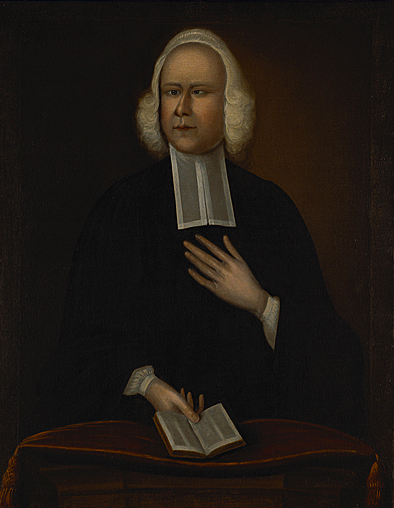
George Whitefield, 1750, by Joseph Badger
Whitefield, reportedly placed a curse upon the town. Whitefield, a minister born in England who was a famously 
impassioned leader of the religious movement in America known as the Great Awakening, and reported to have drawn ardent crowds of 8,000 at the time, visited Bath on several occasions. His manner and austere preachings against such amusements as dancing were not well received in a town with a history of prosperous trade among infamous pirates. At one point, Whitefield gave up and upon leaving the town for the last time proclaimed: “There’s a place in the Bible that says if a place won’t listen to The Word, you shake the dust of the town off your feet, and the town shall be cursed. I have put a curse on this town for a hundred years.”


A Lovely Memorial Garden in Bath, NC (KLWood, 2014)
Not long after, in 1776, the town of Washington (known by us old-timers as Little Washington) was formed fifteen miles up the Pamlico River. Once the seat of Beaufort County government was moved to Washington in 1785, Bath lost most of its trade and importance and its population decreased steadily over the years, never to return to its earlier days of prosperity and power. Today, the town’s population stands at 249. Cursed? Maybe, but some who live there might well call it blessed as they enjoy its peaceful serenity. Perhaps after such a tumultuous beginning, Bath deserves such a restful retirement.

Have a good week, dear Reader. Thanks for stopping by...Y'all come back now! 

Fanciful Floral Fire Hydrant in Bath (KLWood, 2014)


Kate


Check out :    http://www.nchistoricsites.org/bath/bath.htm

Wednesday, April 30, 2014

Stormy Weather...18th century storm chasers

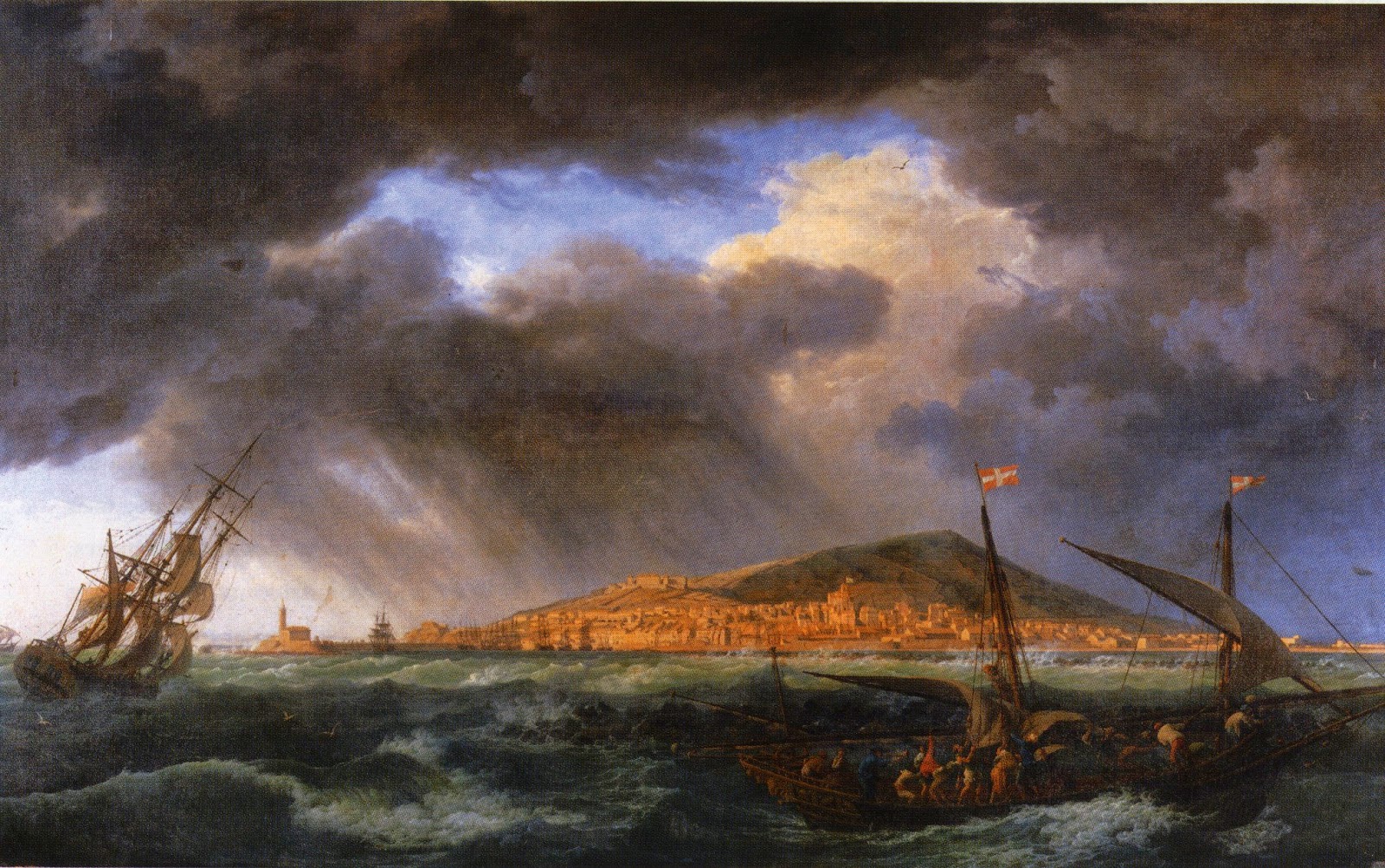
Harbor View from Cette, Claude-Joseph Vernet, mid 1700s
The volatile spring weather made itself boisterously apparent this past week in eastern North Carolina with severe thunderstorms and even devastating tornadoes striking within four miles of this author's home. It drove home the realization that storms during the 18th century were at least as damaging and our ancestors had no early warning system to batten down the hatches. Of course because, here along the shore, we have few basements since the foundations of our homes are so close to the water table, finding a safe haven in the case of an impending tornado is, at best, problematical even today.

A fairly recent phenomena is that of storm chasers. These people jump into vehicles of all description, cameras in hand, to catch the drama of a powerful storm, most often a tornado, as it descends from
Portrait of Claude-Joseph Vernet, Louise Elisabeth Vigee Le Brun, 1778
Mountain Landscape with Approaching Storm, Claude-Joseph Vernet, 1775


the heavens.

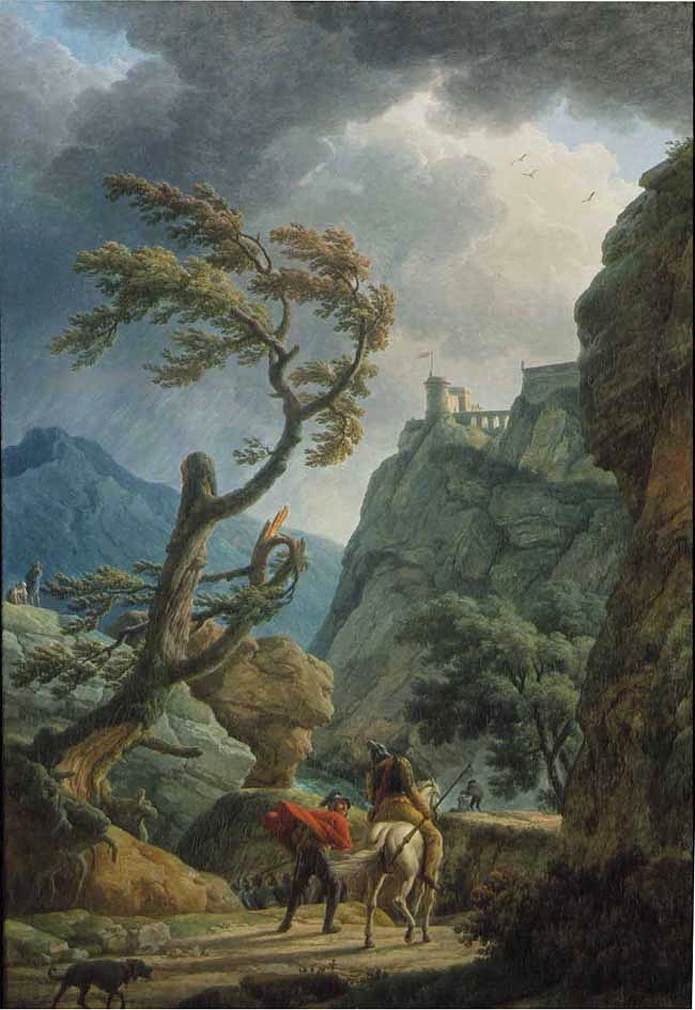
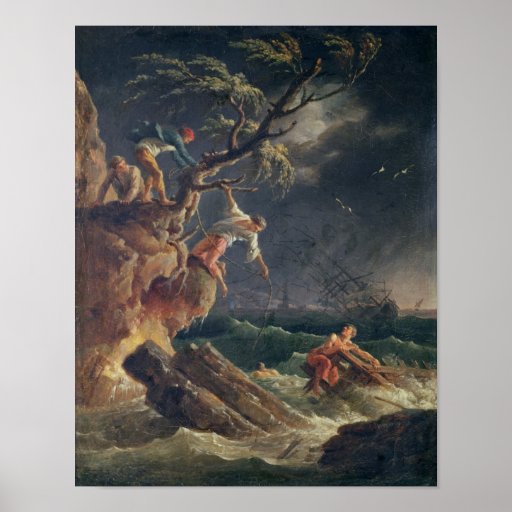
Looking over the Internet, I found many versions of storm chasers, 18th century style: painters who recreated the awesome, terrible beauty of storms, not just of tornadoes but of other severe weather that touched the lives of those around them. What they lacked in immediacy, they more than made up for in portraying the spirit of the storms. It appears to me, however, that Frenchman Claude-Joseph Vernet, 1714-1789, was the king of stormy paintings and so I present several of his works here for your perusal.
Mid-Day, Claude-Joseph Vernet, 1757

A Shipwreck on a Rocky Coast, Claude-Joseph Vernet, 1775
(This one is for sale by Whitfield Fine Art, London)


Soldiers in a Mountain Gorge with a Storm, Claude-Joseph Vernet,1789 
The Tempest, Claude-Joseph Vernet, 1762


And, of course, there is the calm before the storm... 
Seaport by Moonlight, Claude-Joseph Vernet, 1771


Have a good week, dear Reader. Thanks for stopping by...Y'all come back now...
and as Colonel Benjamin Hawkins of the late 18th century so famously wrote to 
President George Washington when asked to return to the nation's capital,
"God willing and the Creek don't rise!"
('Course he was probably referring to the Creek Indians, but we won't split hairs here.)

Kate


Wednesday, April 23, 2014

The Real Robinson Crusoe...the 18th century castaway who inspired Defoe

Robinson Crusoe illustration by N.C. Wyeth
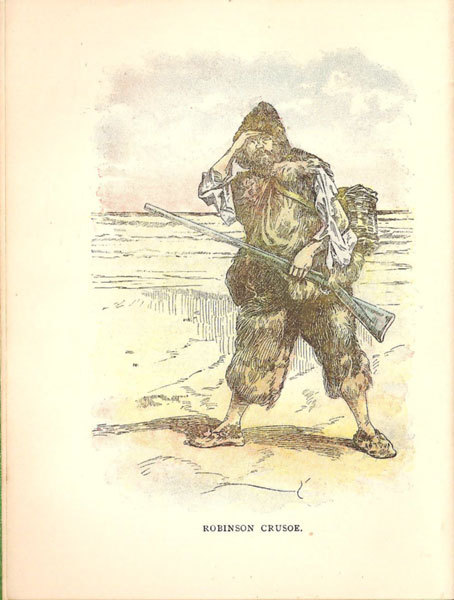
We are all familiar with the quintessential "stranded on a deserted island" story of 18th century author, Daniel Defoe: Robinson Crusoe. Many other stories and films have used it as a springboard including the 1812 novel, The Swiss Family Robinson, by Johann David Wyss (which was made into a 1960 Disney film followed by a 1970's television series version,) the 1960's science fiction spin with the television series, Lost in Space, as well as Tom Hanks' portrayal of the FedEx man stranded after a plane crash in the 2000 film, Cast Away.There are many more examples of fictional portrayals inspired by Defoe's character but who was his inspiration? I discovered the answer in a marvelous book, I have recently purchased, authored in 2007 by Colin Woodard. Woodard's book, based upon his extensive research of original documents of the early 18th century including letters, journals, court depositions, ships' logs, rosters, etc, bears a title with a sub-title long enough to make any 18th century author proud: The Republic of Pirates-- Being The True And Surprising Story Of the Caribbean Pirates And The Man Who Brought Them Down. 


Woodes Rogers Expedition from Bristol to Juan Fernandez Island from National Archives, U.K.
Now, regarding Defoe's inspiration, there really was a man rescued after having been stranded alone on a deserted island for many years. In early 1709 a two-ship privateering expedition (i.e., lawfully sanctioned piracy by British ships against Spanish and French ships,) led by Woodes Rogers, was attempting a foray around the globe when they were forced to  make an emergency stop at Juan Fernandez Island, some 400 miles off the Pacific coast of Chile. The seamen aboard the Duke and Dutchess were dropping like flies from scurvy due to the depletion of needed fruits and vegetables. Juan Fernandez was an island held by Spain but was so remote, its early colonization attempts failed and was only used sporadically by the Spaniards for their own stopovers for fresh water and produce. On the night of January 31, 1709, the island came into view of the two privateering ships. To the crews' dismay a campfire was seen flickering on the beach so, the next morning, they sailed into the harbor, guns at the ready. 
Juan Fernandez Island


Anchoring a mile offshore, no other ship was in sight and the island appeared deserted after all. As a landing boat rowed ashore, a wild-looking man clothed in goatskin, waving a white flag and yelling in excited English, came running to the shoreline. This solitary man, Alexander Selkirk, had been living alone for the previous four and half years with only the company of wild goats, rats and feral cats, the legacy left by early Spanish colonization attempts. And here was the great irony: the reason Selkirk was there at all, was because of a man sailing aboard one of the British ships at anchor. That man, William Dampier, had led a round-the-world privateering expedition back in 1704, but due to his mishandling of his ships' needs, he faced many lawsuits when he returned to England. His ships and crew were so mismanaged, a group of seamen on one of his consort ships, mutinied and sailed to the island of Juan Fernandez on their own. After they'd landed and helped themselves to the fresh water and naturally available food sources on the island, they discovered their ship's hull was riddled with holes from shipworms. Mate Selkirk, decided to take his chances for rescue and remain alone on the island rather than risk death at sea from a ship likely to sink during its voyage.


Robinson Crusoe illustration by Walter Stanley Paget
Scotsman Alexander Selkirk survived by running down and catching wild goats, eating their meat and stitching their hides for clothing and shelter. In time, he domesticated several to insure a ready supply of their life-saving properties. His enemies were the rats who nibbled at his toes at night but by befriending some of the hundreds of feral cats, he gained a measure of respite from their intrusion. He passed his time with survival activities and in reading a copy of the Bible he'd secured before watching his fellow mutineers sail away. Once, he narrowly escaped the hands of a Spanish landing party by hiding in the top of a tree under which the sailors were urinating. When Rogers first saw him, he described Selkirk as looking wilder than the animals who'd first worn the goatskins themselves and noted in his writings that the man was so unused to speaking, he spoke only in half sentences. After twelve days on the island the crew, refortified with tropical fruit, goat stew and broth and with Selkirk reassured that Dampier was not in charge of the expedition, sailed away for the next leg of their adventure.


Daniel Defoe's, Robinson Crusoe
Once back in England, Woodes Rogers published a book about his adventures at sea, A Cruising Voyage Around the World, including an account of the rescue of Alexander Selkirk. Journalist and author Daniel Defoe read this with great interest and went to Bristol to meet with Selkirk who became the inspiration for Defoe's best known work and spawner of numerous copycats, of which the full, original title including its substantial sub-title was, The Life and Strange Surprizing Adventures of Robinson Crusoe, Of York, Mariner: Who lived Eight and Twenty Years, all alone in an un-inhabited Island on the Coast of America, near the Mouth of the Great River of Oroonoque; Having been cast on Shore by Shipwreck, wherein all the Men perished but himself. With An Account how he was at last as strangely deliver'd by Pyrates. 

In 1966, the Chilean government renamed Juan Fernandez Island, Robinson Crusoe Island.

As my dear father was fond of saying, "True story!"

And, now you know!

Have a good week, dear Reader. Thanks for stopping by...Y'all come back now! 

Kate

Wednesday, April 16, 2014

The Power of the Dog...a timely poem by Rudyard Kipling

Betsy
My dear readers, I beg your patience and your indulgence this week as I depart from my usual sharing of 18th century research and take time to mourn the loss of our beloved dog, Betsy, who passed away in my arms April 13, 2014, just a month shy of her twelfth birthday. I am including a poem written by Rudyard Kipling who spoke to our nature of giving dogs our deepest love knowing, full well, their time on earth is far too short. Yes, Betsy's passing has torn my heart in two but for such a loving companion, I gladly give it to her, for it is the least I can do for such a pure soul.  


The Power of the Dog by Rudyard Kipling
There is sorrow enough in the natural way
From men and women to fill our day;
And when we are certain of sorrow in store,
Why do we always arrange for more?
Brothers and Sisters, I bid you beware
Of giving your heart to a dog to tear.

Buy a pup and your money will buy
Love unflinching that cannot lie --
Perfect passion and worship fed
By a kick in the ribs or a pat on the head.
Nevertheless it is hardly fair
To risk your heart for a dog to tear.

When the fourteen years which Nature permits
Are closing in asthma, or tumour, or fits,
And the vet's unspoken prescription runs
To lethal chambers or loaded guns,
Then you will find -- it's your own affair --
But . . . you've given your heart to a dog to tear.

When the body that lived at your single will,
With its whimper of welcome, is stilled (how still!)
When the spirit that answered your every mood
Is gone -- wherever it goes -- for good,
You will discover how much you care,
And will give your heart to a dog to tear.

We've sorrow enough in the natural way,
When it comes to burying Christian clay.
Our loves are not given, but only lent,
At compound interest of cent per cent.
Though it is not always the case, I believe,
That the longer we've kept'em, the more do we grieve;

For, when debts are payable, right or wrong,
A short-time loan is as bad as a long --
So why in -- Heaven (before we are there)
Should we give our hearts to a dog to tear?
The Author and Betsy
Have a good week, dear Reader. Thanks for stopping by...


Kate

Wednesday, April 9, 2014

The Pirate Paradox...how 18th century bandits became Hollywood darlings

Johnny Depp as Captain Jack Sparrow of Disney's Pirates of the Caribbean
So, how did the Golden Age of Piracy, most prominent in the early 18th century, sail into history and into the hearts and minds of the public, spawning tales of adventure and romance on the high seas? How is it that a bunch of sea-going bandits has become the stuff of children's stories and blockbuster movies featuring endearing and often comical characters such as Johnny Depp's portrayal of Captain Jack Sparrow in the 2003 Pirates of the Caribbean movie series which was, itself, inspired by a children's ride in Disney World? Sparrow followed in the footsteps of
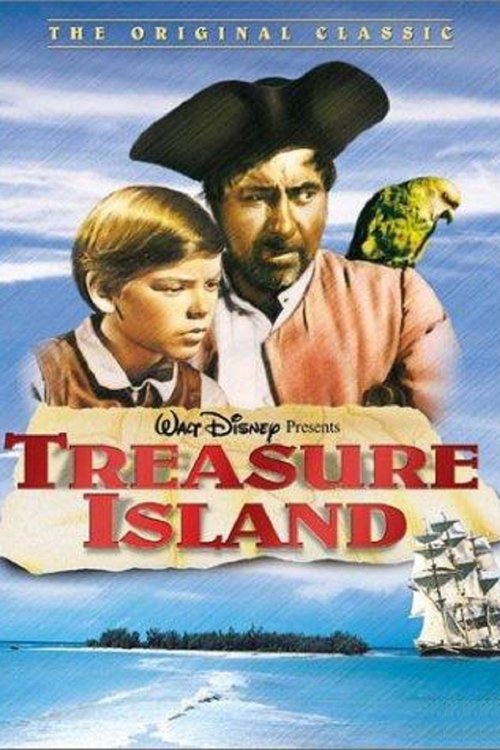
Movie Poster from Disney's 1950 version of Treasure Island
 Robert Louis Stevenson's Long John Silver of
Treasure Island, 1883, and J. M. Barrie's Captain Hook of Peter Pan, 1904. Both Treasure Island and Peter Pan were made into films by the Walt Disney company during the 1950s and, of course, Walt Disney has always been about entertaining children (as well as young-at-heart adults.) 

My research gives some clues into this phenomenon. It seems that the roots of these pirate tales stem from the lives of men who were, in the beginning of their sea-going careers, often pressed into service by the British Royal Navy and then, once on board, mistreated under a variety of tyrannical captains. The means by which they became His or Her Majesty's seamen was sometimes by a blow to the head, after which they'd awaken aboard a tall ship with no means of escape, legal or otherwise. Agents of the Royal Navy would haunt taverns to scout for likely candidates and follow them out, clubs in hand, as the intended victims wove their inebriated paths toward home. As members of the Royal Navy, these unfortunate men often lived under harsh conditions and were paid little or nothing for their service. The captain's word was law and he could dole out any punishment from flogging to drowning at his order
From "The Last Battle of Blackbeard" by Edward Eggleston, 1895
and whim. That is not to say all captains were oppressive and all seamen were kidnapped, but enough were to build the foundation for the league of pirates, men who once they'd left the Royal Navy by whatever means they could, went into business for themselves. This was especially true for a man such as Edward Teach AKA Edward Thatch AKA Blackbeard who was trained as a "legal" pirate, known as a privateer, expected to capture and rob ships looked upon as enemies of the British realm. It was under Queen Anne that Blackbeard learned his trade and when his services were no longer needed, set out on his own to ply the profitable waters of the Atlantic. He even named his flagship, one he'd confiscated from the French, the Queen Anne's Revenge.


One of the things that set the pirates apart from the legally acceptable tyrants of the Royal Navy, was their relative democracy. Pirate seamen voted for their captains and could vote to depose them if things didn't work out well. They were also paid a great
The Pirate Flag of Blackbeard (designed to intimidate!)
deal more than they were while in the Royal Navy. "Honor among thieves" was a very real part of their world. There were, of course, pirate captains who were just as despicable as the worst of the Navy's and ruled their men with an iron fist gripped tightly around a cat-o-nine-tails, ready to lash out at the slightest hint of insubordination. Although there were atrocities among them, many a pirate leader used image and intimidation rather than cruelty as the means to their end. It is said that Blackbeard was a master at this with his frightening appearance enhanced by his naturally huge stature and his habit of tying slow-burning fuses in his long, black beard giving him the illusion of a creature straight from the gates of Hell. 


I believe the public formed a kind of admiration for these men (and a few pirate women) who, having suffered under the heavy hand of the all-powerful law of the land and sea, went on to form fairly democratic, albeit sometimes brutal, fellowships of their own and lived the life of "sticking it to the Man" that many secretly wished they could as well. This notion has made its way down to our present time, long after the last of such pirates was pardoned by royal decree, retired through self-exile or hanged on the gallows.
The Author striking a piratical pose at the Queen Anne's Revenge exhibit
 in New Berm NC. 2014

Have a good week, dear Reader. Thanks for stopping by...Y'all come back now! (Arrrgh!)

Kate

Wednesday, April 2, 2014

18th Century Selfies...revealing self-portraits

Clearly, this yawning self-portrait of Joseph Ducreux,
1783, shows the artist did not take himself too seriously.
In this age of cell phone selfies popping up all over the Web capturing self-portraits of celebrities, wannabe celebrities, teenagers, adults, toddlers (who've grabbed their parents phones to imitate them with often hilarious parodies of said parents,) and even shamed political figures one would think would know better, I pondered the selfies of former days. Of course, those selfies were created by accomplished artists. What do those self-portraits say about their subjects, the artists themselves? I'm sure many of them were honest portrayals but, even before the days of photo-shopped enhancements, there must have been the temptation to paint one's self in the most flattering light. So, this week I've searched the Internet and harvested a few of those 18th century selfies for your edification and enjoyment:
Judging by these self-portraits of Decreux, this one from 1793, the artist
had quite a sense of humor. But there's something about his expression, here, that
makes me think I wouldn't want to get on his wrong side and become the butt of his jokes.
I can imagine the title for this self-portrait as Gotcha! 
Now, here is an artist who took himself VERY seriously but you
probably would have too if you'd been Jacques-Louis David painting
 this while imprisoned during the French Revolution in 1784.


Blame my art history ignorance but, until I began hunting down 18th century artists for my research, I was unaware of the number of accomplished female artists of the era. Here, in all their finery, are just a couple I ran across:

Yes, female artists of the time were expected to paint dressed up in their
 fashionable ensembles as seen here in Adelaide Labille-Guiard's self-portrait 
with pupils in 1784. 
(I can't even eat a bowl of spaghetti without splattering it all over my clothes!)

This beauty, Marie-Gabrielle Capet, appears to like what she sees 
in her 1783 self-portrait, but who could blame her?


I ran across a number of self-portraits, male and female, featuring artists 
shading their eyes as here with Sir Joshua Reynolds in 1745.

Perhaps those artists plagued with sun in their eyes should have followed 
the example of Jean-Baptiste-Siméon Chardin as seen in his 1775 self-portrait
 wearing a clever visor and, take note ladies, protecting his hair with a turban!

Gotta love a man who puts his dog before him!
 This is the self-portrait of Englishman, William Hogarth with his pug, Trump, in 1745.

The Author's 18th Century Selfie 
(with a little help from Louise Élisabeth Vigée Le Brun)

Have a good week, dear Reader. Thanks for stopping by...Y'all come back now! 

Kate