Showing posts with label colonial America. Show all posts

Wednesday, December 25, 2013

Christmas Verses for the Printer's Devil...an 18th century poem of a Colonial Christmas

"The Mistletoe Bough" by Francis Wheatley, 1790
This week I beg my Reader's pardon and indulgence as I celebrate this busy and beloved Christmas week, with little time to research and write, with a poem I've just discovered which gives an amusing look and first person insight into 18th century American Christmas traditions. It was written in the late 1700's by St. George Tucker of Williamsburg, Virginia. The term "Printer's Devil" refers to a printer's apprentice, often the youngest, who spent much of his time stained with black ink. As my husband was a printer's apprentice in his younger days, this poem is especially dear to me. 

 "Christmas Verses for the Printer's Devil"
                   by St. George Tucker
Now the season for mirth and good eating advances,
Plays, oysters and sheldrakes, balls, mince pies and dances;
Fat pullets, fat turkeys, and fat geese to feed on,
Fat mutton and beef; more by half than you've need on;
Fat pigs and fat hogs, fat cooks and fat venison,
Fat aldermen ready the haunch to lay hands on;
Fat wives and fat daughters, fat husbands and sons,
Fat doctors and parsons, fat lawyers and duns;
What a dancing and fiddling, and gobbling and grunting,
As if Nimrod himself had just come in from hunting!
These all are your comforts—while mine are so small,
I may truly be said to have nothing at all.
I'm a Devil you know, and can't live without fire,
From your doors I can see it, but I dare not come nigher;
Now if you refuse me some wood, or some coal,
I must e'en go and warm, in old Beelzebub's hole;
Next, tho' I'm a devil, I drink and I eat,
Therefore stand in need of some rum, wine and meat;
Some clothes too I want—for I'm blacker than soot,
And a hat, and some shoes, for my horns and my foot;
To supply all these wants, pray good people be civil
And give a few pence to a poor printer's devil.
Have a good week, dear Reader. Thanks for stopping by...Y'all come back now...
and a Merry Christmas to one and all!

Kate


Wednesday, December 4, 2013

Syllabub Anyone?...18th Century Festive Holiday Drinks

"The Sense of Taste" by Philip Mercier (circa 1689-1760) 
Ah, 'tis the season for raising a toast of good cheer or simply sipping something warm and wonderful by candlelight or a crackling fire. The 18th century had its share of Christmas "spirits" whose tasty descendants still grace our tables and tickle our taste buds today. One of these that made its way from 16th century Tudor England into my own 20th century North Carolina childhood is that creamy, luscious concoction known as Syllabub, a frothy blend of sweetened wine or cider and rich cream. I had such fond memories of this holiday treat, I even named a dear, big, beautiful Maine Coon Cat of mine, "Sir Syllabub" ("Bubba" for short.)

Syllabub. The origins of the name are speculative but it's so much fun to say aloud, isn't it? Rolls around your tongue and then just pops right out. A multi-syllabic party in your mouth! Syllabub was a very popular, festive beverage in 18th century Colonial America, as well as in Great Britain, and many recipes of the period show a goodly amount of variations on the theme. There are even recipes that involve milking a cow directly over a bowl of sweetened wine or cider. I think I'll pass on that one this year, thank you very much. There are two basic forms of Syllabub, one in which the sweetened wine/fruit juice is whipped into heavy cream in such a way as to remain consolidated, and one in which the liquid drains out of the mixture leaving the wine in the bottom of the glass and the thick cream on top. For this latter method, there were special Syllabub drinking vessels with a spout from which one could drink the liquid and use a spoon for the creamy froth on top. 

North Carolina Scuppernong Grapes,
 photo by Kathryn Louise Wood
My childhood memories are of the type that stays consolidated, served chilled, and is a cross between a drink and a dessert to be eaten with a spoon. Now, my family's roots are of the tea-totaling Methodist and Baptist variety and alcohol was not considered acceptable holiday fare so our Syllabub was made with "soft" cider made from apples or Scuppernong grapes. HOWEVER...once in a while (no one claims to know exactly how it happened) that cider might sit in the pantry for quite a spell waiting for Christmas and could (under just the right, mysterious circumstances) have a little extra kick about it, bordering on the "hard" side. When that happened, there would be a bit more of the "silly" in the Syllabub.

In the weeks to come I will share other 18th century holiday recipes but, for now, I will give you directions from some historic cookbooks for Syllabub. You may adapt these instructions with modern methods and ingredients and still enjoy a traditional treat with which your ancestors would feel at home. The first is closer to the kind of Syllabub of my youth (replacing the wine-- Rhenish and sack-- with "soft" cider...of course...) The second is of the liquid on the bottom, cream on the top variety.

"To Make Everlasting Syllabubs"
Hannah Glasse, The Art of Cookery made Plain and Easy, London 1758

~Take five half pints of thick cream, half a pint of Rhenish, half a pint of sack, and the juice of two large Seville Oranges; grate in just the yellow rind of three lemons and a pound of double-refined sugar well beat, and sifted. Mix all together with a spoonful of orange flower water, beat it well together with a whisk half an hour, then with a spoon fill your glasses. These will keep above a week, and is better made the day before.~


"Lemon Syllabub"
Elizabeth Raffald, The Experienced English Housekeeper, London 1784
Detail from"The Sense of Taste" by Philip Mercier (circa 1689-1760) 

~Put a pint of cream to a pint of white wine, then rub a quarter of a pound of loaf sugar upon the out rind of two lemons, till you have got out all the essence, then put the sugar to the cream, and squeeze in the juice of both lemons, let it stand for two hours, then mill them with a chocolate mill, to raise the froth, and take it off with a spoon as it rises, or it will make it heavy, lay it upon a hair sieve to drain, then fill your glasses with the remainder, and lay on the froth as high as you can, let them stand all night and they will be clear at the bottom.~

Enjoy your Syllabub mustaches!

Have a good week, dear Reader. Thanks for stopping by...Y'all come back now! 
Kate


Wednesday, November 13, 2013

So You Want To Be A Doctor...in Colonial America?

Portrait of 18th century Surgeon John Hunter by Joshua Reynolds
During the early days of Colonial America, university trained physicians were few and far between. Most doctors, trained in Europe, were quite comfortable remaining in their homeland and had no desire to brave the wilds of the New World. Many of the doctors who came and remained in 17th and 18th century America were ship's surgeons or apothecaries, at best. There were, however, a few brave medical souls who found the idea of chartering unknown territory a desirable, even exciting one. As time went by, more and more young colonists were sent to Europe for their medical training and returned home to serve the needs of the pioneering folk of the thirteen colonies.

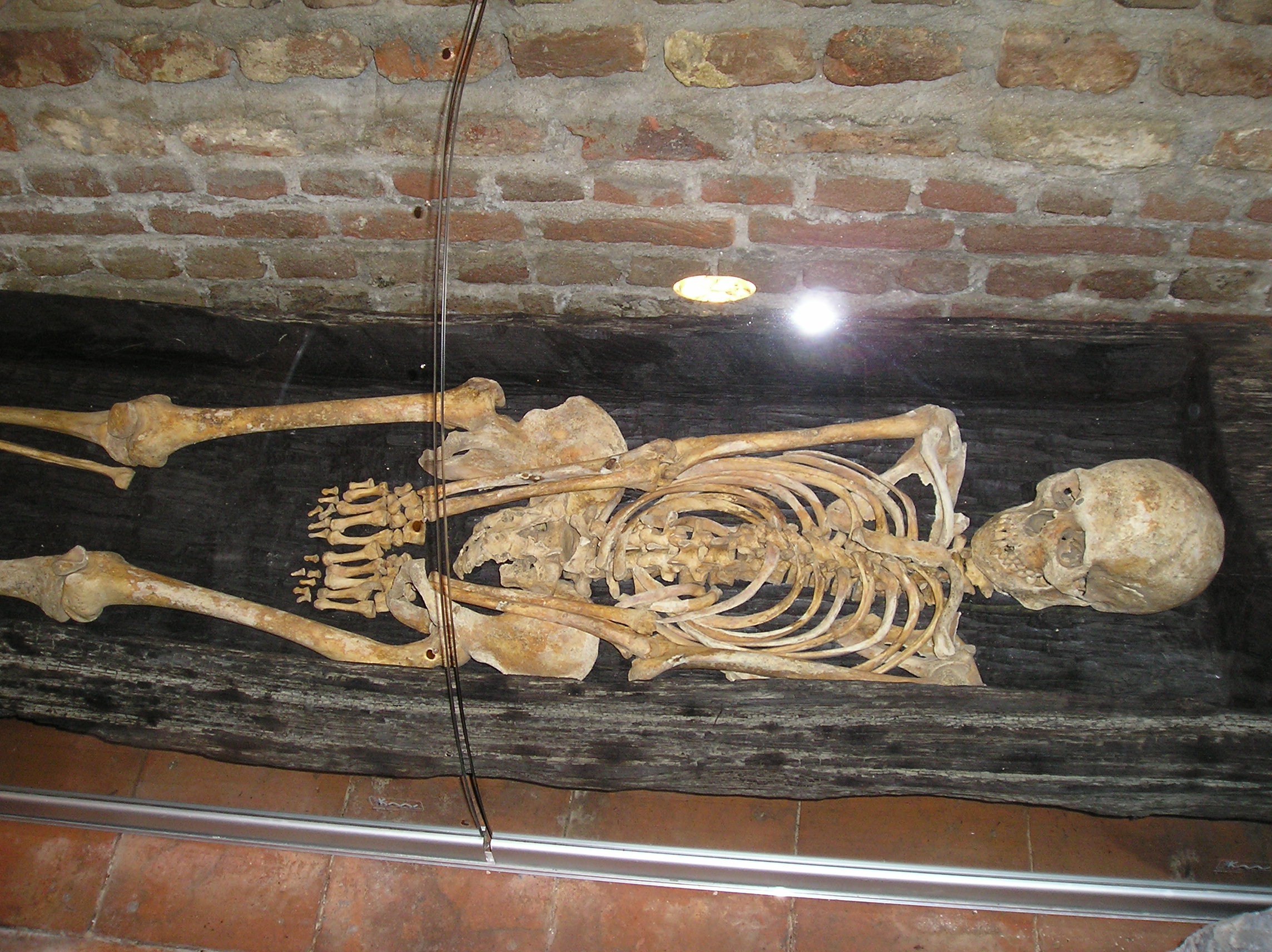
One practice that prevailed all the way into the middle of the 19th century was that of young men apprenticing to established doctors. The term of the apprenticeship averaged five to seven years and usually commenced between the ages of 14 and 18. The young apprentice would pay a fee of about $300 and for that he would be given room and board, often in the physician's own home, training, and finally a certificate of completion along with medical books and a set of pocket tools to begin his professional life. He might even receive the skeleton of the body stolen from the churchyard with which he had received much of his education!

By Vincent de Groot 
The first phase of his training was termed "reading with the doctor." During this time he would be given reading assignments from medical texts and would be tested on the information as well as instructed to recite what he had learned. He would also observe and, later, assist with patients who came to the doctor's office. Skills involving bloodletting, tooth extraction, and the care of wounds would be learned in this way. Many doctors of the time mixed and dispensed their own medicine so the apprentice would spend much time learning to grind, mix, and prepare needed drugs.

The second phase of training was called "riding with the doctor," in which the student/assistant would accompany the doctor as he attended his patients in their homes. The apprentice listened and observed the doctor and on the way home would discuss the diagnosis and method of treatment. He would assist the doctor during these house calls and toward the end of his training would be sent out on his own to check on patients under his teacher's care. For 200 years, 90 percent of American doctors were trained under the apprenticeship method and even as late as the mid 19th century, more than half had still been trained in this manner.

Men did not pursue medicine to become wealthy. Especially away from the larger towns, patients might pay their doctors with produce or eggs from their own farms. Perhaps I'll drop my health insurance and stock up on canned tomatoes from my garden instead. What do you say, Doc?  

Have a good week, dear Reader. Thanks for stopping by...Y'all come back now!

Kate

(My thanks to the Galter Health Sciences of Northwestern University for this research. You may read more at  http://www.galter.northwestern.edu/Digital-Projects/arey/chapter1.pdf .   Skeleton photo: - http://www.videgro.net (Own work) [GFDL (http://www.gnu.org/copyleft/fdl.html),  CC-BY-SA-3.0 (http://creativecommons.org/licenses/by-sa/3.0/) or CC-BY-5 (http://creativecommons.org/licenses/by/2.5)], via Wikimedia Commons)